
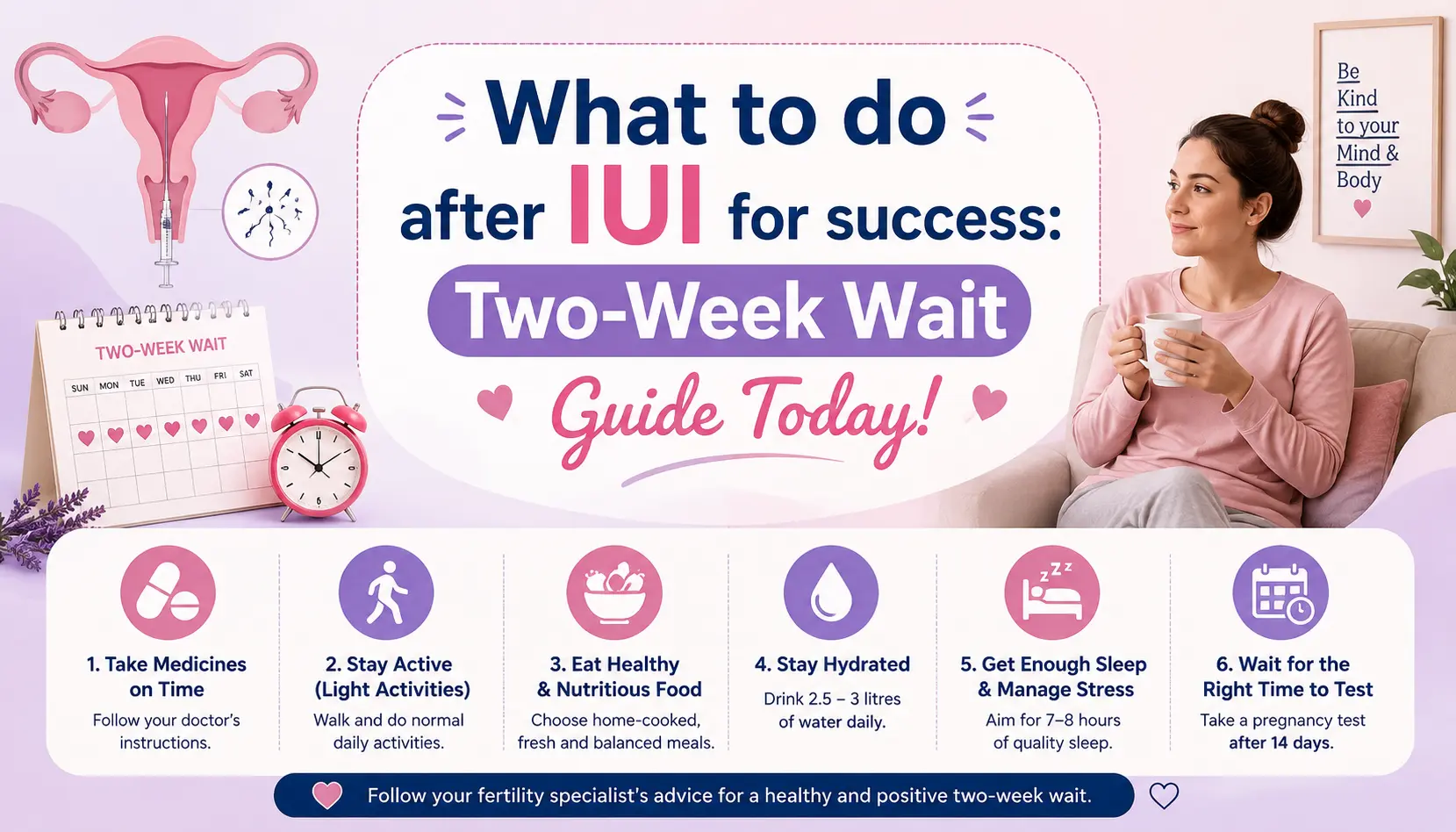
After undergoing IUI (Intrauterine Insemination), the next 14 days are an important waiting period. This phase is commonly known as the Two-Week Wait (TWW) and can bring excitement, anxiety, and many questions about what you should or should not do. After IUI, the focus should be on following your fertility specialist’s instructions, supporting your overall health, avoiding excessive physical strain, and waiting for the right time to take a pregnancy test.
Knowing what to do after IUI can help you follow a calm and structured routine during this waiting period. From taking prescribed medicines and eating nutritious food to getting enough sleep and avoiding excessive heat, several simple precautions can help you take better care of yourself after the procedure.
READ MORE: Is IUI Painful Process? Procedure, Pain & Recovery Guide IUI
What Should You Do After IUI for the Best Possible Outcome?
After IUI, focus on these key steps:
- Take all doctor-prescribed medicines on time.
- Continue normal light activities and walking.
- Avoid heavy lifting and intense workouts.
- Eat fresh, nutritious, home-cooked food.
- Drink adequate water.
- Avoid excessive caffeine and highly processed foods.
- Avoid hot tubs, saunas, steam baths, and direct heat on the abdomen.
- Get around 7–8 hours of uninterrupted sleep.
- Follow your fertility specialist’s advice regarding sexual intercourse.
- Avoid taking an early pregnancy test because an HCG trigger shot may cause a false-positive result.
The two-week wait is primarily about following your treatment plan and taking care of your physical and emotional well-being.
1. Take Your Prescribed Medications on Time
One of the most important things to do after IUI is to follow the medication schedule provided by your doctor.
Why Is Progesterone Sometimes Given After IUI?
Progesterone supplements may be prescribed after IUI in the form of tablets, gel, or pessaries. The source material explains that progesterone support helps maintain the thickness of the uterine lining so that an embryo can attach to it.
If progesterone has been prescribed, take it exactly as instructed.
Should You Stop Medication If You Notice Spotting?
Do not stop prescribed medication on your own. Even if light spotting occurs, medication should not be discontinued without your doctor’s advice.
Your fertility specialist should guide you about whether any medication needs to be continued, changed, or stopped.
2. Do You Need Complete Bed Rest After IUI?
Generally, spending the entire day in bed is not necessary according to the provided guidance.
A short period of rest at the clinic after the procedure may be sufficient. After returning home, light walking and normal daily activities can be continued rather than remaining on strict bed rest.
The goal during the two-week wait is to maintain a comfortable and relatively stress-free routine without putting the body under excessive physical strain.
What Physical Activities Should You Avoid After IUI?
During this period, avoid activities involving significant physical exertion, such as:
- Heavy weightlifting
- Intense workouts
- Fast running
- Heavy cardio
- Excessive bending
- Activities that put pressure on the abdomen
Light walking and regular daily activities can be part of your routine.
3. What Should You Eat After IUI?
Nutrition is another important part of taking care of yourself during the two-week wait.
The provided guidance recommends fresh, home-cooked foods and includes foods such as:
- Dal
- Green vegetables
- Almonds
- Walnuts
- Whole grains
A balanced diet can help support overall health while you wait for the pregnancy test.
How Much Water Should You Drink After IUI?
The source recommends drinking approximately 2.5 to 3 litres of water per day.
Staying hydrated is included as part of maintaining a healthy routine during the post-IUI period.
Which Foods Should You Avoid After IUI?
The provided guidance recommends avoiding or limiting:
- Processed food
- Excessively oily food
- Very spicy food
- Raw or undercooked eggs or meat
- Excess caffeine
Tea or coffee should be limited to no more than one cup per day according to the source material.
4. Should You Avoid Hot Baths After IUI?
The provided guidance recommends avoiding activities that significantly increase body temperature during the two-week wait.
Avoid:
- Hot water tubs
- Saunas
- Steam baths
- Direct application of a hot water bag to the abdomen
A normal lukewarm shower is suggested instead.
5. How Important Are Sleep and Stress Management After IUI?
The two-week wait can be emotionally demanding. Managing stress and getting adequate sleep are therefore important parts of maintaining a healthy routine.
The provided material explains that increased stress can lead to the release of cortisol, which may affect reproductive hormone balance.
Aim for approximately 7–8 hours of uninterrupted sleep each night.
You can also focus on maintaining a positive mindset and avoiding unnecessary stress during the waiting period.
6. Can You Have Sexual Intercourse After IUI?
Whether intercourse is recommended after IUI depends on your individual treatment plan.
According to the provided guidance, a doctor may recommend intercourse within 24–48 hours after IUI as part of the treatment plan.
However, around the implantation phase, which the source places approximately 6–10 days after IUI, a fertility specialist may advise avoiding intercourse.
Because recommendations can differ depending on the treatment plan, follow the specific instructions given by your fertility specialist.
What Should You Avoid During the IUI Two-Week Wait?
Some of the key things to avoid during the two-week wait include:
| What to Do | What to Avoid |
|---|---|
| Take prescribed medicines on time | Taking an early pregnancy test |
| Continue light walking | Strict bed rest |
| Maintain regular light activities | Heavy workouts and running |
| Eat nutritious home-cooked food | Highly processed and oily foods |
| Stay adequately hydrated | Excess caffeine |
| Sleep for 7–8 hours | Unnecessary stress |
| Follow your doctor's instructions | Heavy weightlifting |
| Maintain a comfortable routine | Hot tubs, saunas, steam baths, and abdominal heating pads |
When Does Implantation Happen After IUI?
The provided material describes the implantation phase as occurring approximately 6–10 days after IUI.
This is part of the two-week waiting period, which is why patients are generally advised to focus on their treatment instructions and healthy routine rather than trying to determine pregnancy too early.
READ MORE: How Many Days After IUI Does Implantation Occur | Guide 2026
When Should You Take a Pregnancy Test After IUI?
One of the most common questions after IUI is: “How many days after IUI should I take a pregnancy test?”
The provided guidance recommends waiting at least 14 days after IUI before taking a home pregnancy test.
This is particularly important when an HCG trigger shot has been used.
Why Can an Early Pregnancy Test Show a False Positive?
An HCG trigger shot can remain in the body and may be detected by a home pregnancy test.
Therefore, testing only 7–10 days after IUI may produce a false-positive result because of the HCG from the trigger shot rather than pregnancy.
For a more reliable result, wait at least 14 days after IUI or consult your clinic about a Beta-HCG blood test.
What Is the Most Important Thing to Remember After IUI?
The most important step is to follow your fertility specialist’s instructions throughout the two-week wait.
Do not change prescribed medication without medical advice. Avoid excessive physical exertion, maintain a nutritious diet, stay hydrated, get adequate sleep, manage stress, and wait until the appropriate time before testing for pregnancy.
Every fertility journey is different, so individualized medical advice should always take priority over general guidance.
Final Takeaway: How to Support Yourself After IUI
The two-week wait after IUI can be an emotional period, but you do not need to remain on strict bed rest or completely stop your normal routine. Instead, focus on following your fertility specialist’s instructions and maintaining healthy daily habits.
Take prescribed medications on time, continue light activities such as walking, avoid heavy exercise, eat fresh and nutritious food, drink approximately 2.5–3 litres of water, avoid excessive heat, get 7–8 hours of sleep, and manage unnecessary stress. Follow your doctor’s specific advice regarding sexual intercourse and wait at least 14 days before taking a pregnancy test, particularly if an HCG trigger shot was used.
For individuals and couples seeking IUI treatment guidance, Surrogacy Fertility helps connect patients with trusted fertility specialists and ART-registered clinics. Its IUI treatment consultation service provides guidance from fertility assessment and ovulation monitoring through treatment planning, helping patients understand their available fertility options and choose a suitable fertility specialist.
Remember that every fertility treatment journey is different. General post-IUI guidance should not replace personalized instructions from your fertility specialist. Following your prescribed treatment plan and taking care of yourself during the two-week wait are the most important steps you can take.
Frequently Asked Questions (FAQs)
After IUI, follow your fertility specialist’s instructions carefully, take prescribed medicines on time, maintain light daily activities, eat nutritious food, stay hydrated, and get 7–8 hours of sleep. Avoid heavy exercise, excessive physical exertion, hot tubs, saunas, and direct heat on the abdomen during the two-week wait.
Yes, light walking and normal daily activities can generally be continued after IUI. Strict bed rest is not necessary according to the provided guidance. However, avoid heavy weightlifting, intense workouts, fast running, heavy cardio, excessive bending, and activities that put pressure on the abdomen during the two-week wait.
A pregnancy test should generally be taken at least 14 days after IUI. Testing earlier, particularly 7–10 days after IUI, may produce a false-positive result if an HCG trigger shot was used. A clinic may also perform a Beta-HCG blood test for pregnancy confirmation.
After IUI, choose fresh, home-cooked and nutritious foods such as dal, green vegetables, almonds, walnuts, and whole grains. The provided guidance recommends drinking approximately 2.5–3 litres of water daily. Limit processed, oily, and spicy foods and keep tea or coffee to one cup per day.
During the IUI two-week wait, avoid heavy workouts, running, weightlifting, excessive bending, and activities that put pressure on the abdomen. Hot tubs, saunas, steam baths, and direct heat on the abdomen should also be avoided. Follow your doctor’s medication and intercourse instructions carefully.
2 Comments
What Is IUI Treatment? How It Works And When Recommended
August 11, 2026[…] This approximately two-week period is often referred to as the two-week wait. During this time, it is important to follow the treating doctor’s instructions and avoid interpreting individual symptoms as confirmation of pregnancy.READ MORE : What to do after IUI for success: Two-Week Wait Guide Today! […]
Is Cramping After IUI A Good Sign? Causes And What It Means!
August 21, 2026[…] The two-week wait (2WW) can be emotionally challenging. During this period, it is easy to notice every small sensation and wonder whether it means pregnancy.READ MORE : What to do after IUI for success: Two-Week Wait Guide Today! […]