
If you have recently undergone Intrauterine Insemination (IUI), one of the most common questions that comes to mind is, “How many days after IUI does implantation occur?” Waiting for the pregnancy test can feel emotionally challenging, and understanding what happens inside your body during this period can help reduce unnecessary anxiety.
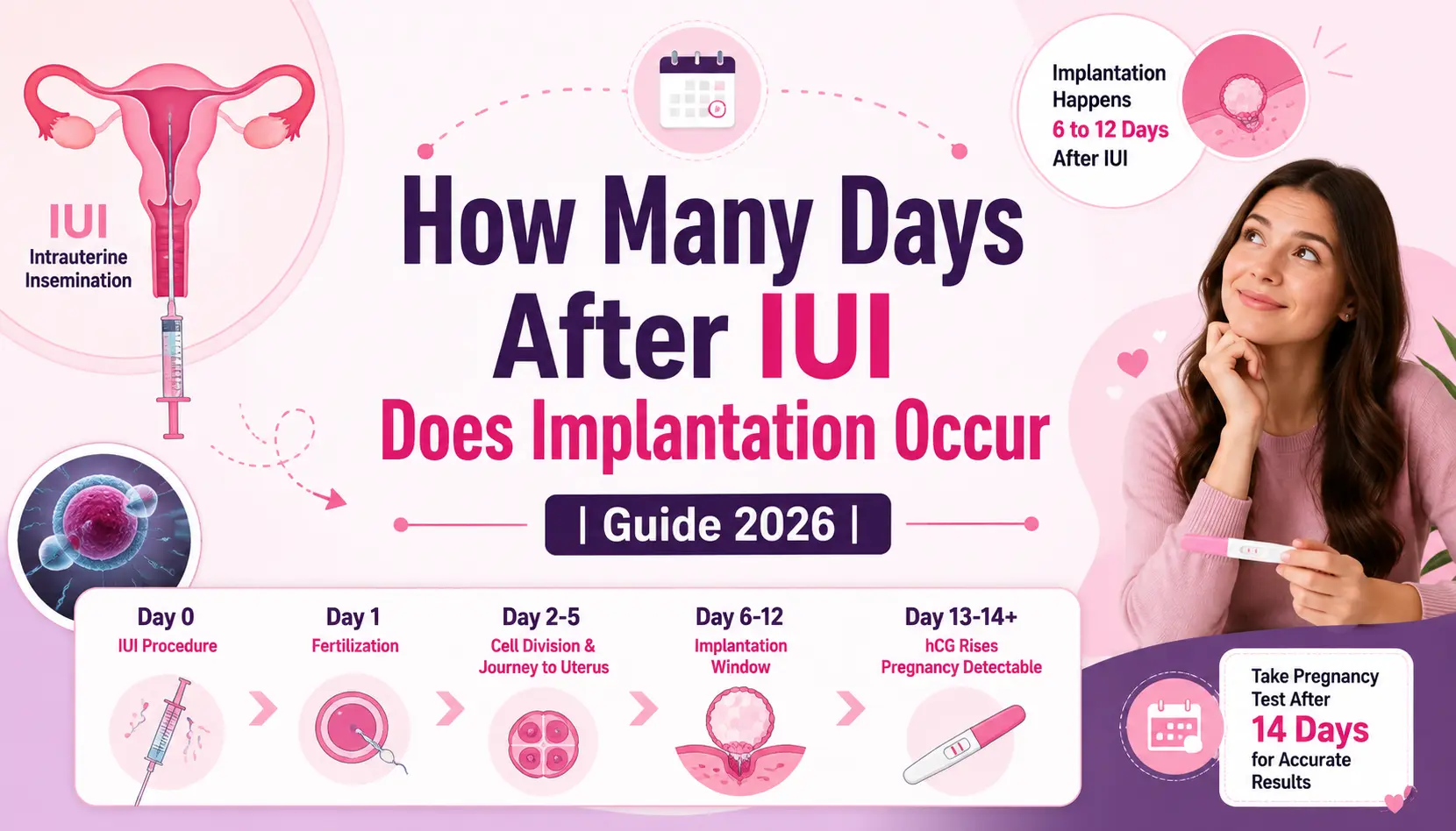
In most cases, implantation occurs between 6 and 12 days after IUI, with 8 to 10 days post-IUI (DPIUI) being the most common implantation window. During this time, the fertilized egg travels to the uterus, develops into a blastocyst, and attaches to the uterine lining. Once implantation is complete, the body begins producing the pregnancy hormone hCG, which can later be detected through a blood or urine pregnancy test.
Quick Answer
Implantation after IUI generally happens within 6–12 days after the procedure. The most common implantation period is 8–10 days after IUI. However, every woman and every fertility journey is unique, so the exact timing may vary.
Understanding the Journey After IUI
Knowing what happens after IUI can make the waiting period easier to understand. Rather than expecting immediate pregnancy, it helps to see implantation as a gradual biological process.
Day 0–1: IUI Procedure and Fertilization
During the IUI procedure, specially prepared and highly active sperm are placed directly inside the uterus. If a mature egg is available, fertilization generally occurs within the next 12 to 24 hours inside the fallopian tube.
This marks the beginning of a potential pregnancy, but pregnancy itself is not established until implantation takes place.
Day 2–5: Cell Division and Travel to the Uterus
After fertilization, the single fertilized egg starts dividing into multiple cells while travelling through the fallopian tube toward the uterus.
By around Day 5, it develops into a blastocyst, a tiny ball of cells that is ready to reach the uterine lining.
Day 6–12: Implantation Window
This is the most important stage after IUI.
The blastocyst reaches the uterus and begins attaching itself to the endometrium (the uterine lining). This attachment process is called implantation.
Most implantation occurs between 6 and 12 days after IUI, with 8–10 days being the most commonly observed timeframe.
Only after successful implantation does the pregnancy begin to establish itself.
Day 13–14: hCG Hormone Begins to Rise
Once implantation is complete, the body starts producing human Chorionic Gonadotropin (hCG), the hormone detected by pregnancy tests.
Around 14 days after IUI, hCG levels are usually high enough to be detected through a blood Beta-hCG test or a home urine pregnancy test.
A Simple Way to Understand Implantation
Imagine a seed being planted in fertile soil.
The IUI procedure helps ensure that the sperm reaches the right place at the right time to meet the egg. However, simply creating the seed is not enough. The seed must settle into the soil and develop roots before it can begin to grow.
Similarly, after fertilization, the embryo needs several days to travel to the uterus and attach itself securely to the uterine lining. This attachment period is known as the implantation window and is an essential step in establishing pregnancy.
Common Implantation Symptoms After IUI
Not every woman experiences implantation symptoms, and the symptoms can differ from person to person. Some of the commonly noticed signs include:
Light Spotting
Some women may notice light pink or brown spotting that lasts for one or two days. This is sometimes referred to as implantation bleeding.
Mild Lower Abdominal Cramping
A mild pulling sensation or light cramps in the lower abdomen may occur as the embryo attaches to the uterine lining.
Breast Tenderness
Hormonal changes following implantation can make the breasts feel sore, heavy, or more sensitive than usual.
Fatigue
Feeling unusually tired during the implantation window may occur as the body begins responding to hormonal changes.
Slight Temperature Changes
Some women may notice that their basal body temperature remains slightly elevated during this period.
It is important to remember that these symptoms are not reliable confirmation of pregnancy. Many women receiving progesterone support after IUI may experience similar symptoms even when implantation has not yet occurred. Therefore, symptoms alone should never be used to determine treatment success.
When Should You Take a Pregnancy Test After IUI?
Patience is extremely important after IUI.
Many fertility treatments include a trigger shot, which already contains the hCG hormone. Testing too early may detect this medication instead of a pregnancy, leading to a false-positive result.
For the most reliable outcome, pregnancy testing should be done at least 14 days after IUI. Your fertility specialist may recommend either a Blood Beta-hCG test or a home urine pregnancy test, depending on your situation.
Testing before this recommended period can create unnecessary confusion and emotional stress.
Latest Fertility Research (2026)
A 2026 case report published in the peer-reviewed journal Cureus highlighted that implantation timing may vary in certain complex fertility cases. Researchers identified an exceptionally early implantation window using Endometrial Receptivity Analysis (ERA) in a woman with repeated implantation failure. After personalizing treatment based on the ERA findings, the patient achieved a successful pregnancy and live birth.
Although this report demonstrates the value of personalized fertility care in selected patients, it does not change the standard implantation timeline after IUI. For most women, implantation still occurs between 6 and 12 days after IUI, with 8–10 days being the most common timeframe. The findings mainly reinforce that individualized testing may benefit people with recurrent implantation failure rather than routine IUI patients.
Final Thoughts
Implantation after IUI is a natural biological process that usually occurs 6 to 12 days after the procedure, with 8 to 10 days post-IUI being the most common implantation window. During these days, the fertilized egg develops, travels to the uterus, and attaches to the uterine lining before the pregnancy hormone hCG begins to rise.
While mild spotting, cramping, breast tenderness, fatigue, or slight temperature changes may occur, these symptoms are not definitive indicators of pregnancy because fertility medications can produce similar effects. The most dependable way to confirm pregnancy is to wait until 14 days after IUI before taking a recommended pregnancy test.
If you are preparing for IUI treatment or have questions about your fertility journey, receiving guidance from experienced fertility professionals can help you better understand each stage of the process. At SurrogacyFertility, we connect individuals and couples with verified fertility specialists and trusted IUI treatment providers, offering transparent guidance and personalized support to help them make informed decisions throughout their parenthood journey.
Frequently Asked Questions (FAQs)
Implantation after IUI usually occurs between 6 and 12 days, with the most common implantation window being 8 to 10 days after the procedure. During this time, the fertilized egg develops into a blastocyst, reaches the uterus, and attaches to the uterine lining, marking the beginning of pregnancy.
Common implantation symptoms after IUI may include light spotting, mild lower abdominal cramping, breast tenderness, fatigue, and slight body temperature changes. However, these symptoms are not a confirmed sign of pregnancy because progesterone medications used after IUI can produce similar effects.
The ideal time to take a pregnancy test is at least 14 days after IUI. Testing earlier may result in a false-positive if a trigger injection containing hCG was used before the procedure. Waiting until the recommended testing window provides a more accurate and reliable pregnancy result.
After IUI, fertilization typically occurs within 12 to 24 hours if a mature egg is available. The fertilized egg then divides into multiple cells, develops into a blastocyst over the next few days, travels to the uterus, and implants into the uterine lining between 6 and 12 days after IUI.
Yes. Many women experience no noticeable implantation symptoms after IUI, and this is completely normal. Successful implantation does not always cause spotting or cramping. The only reliable way to confirm pregnancy is by taking a pregnancy test after the recommended 14-day waiting period.
2 Comments
How Many Times Can IUI Be Done? Ideal IUI Cycles Explained.
August 6, 2026[…] In most cases, IUI can be performed in consecutive menstrual cycles. If one cycle is unsuccessful, the next cycle can usually begin after the following menstrual period without requiring a long waiting period.READ MORE: Wondering when implantation happens after an IUI procedure and what symptoms to expect? Read our detailed guide on How Many Days After IUI Does Implantation Occur | Guide 2026. […]
What To Do After IUI For Success: Two-Week Wait Guide Today!
August 7, 2026[…] READ MORE: How Many Days After IUI Does Implantation Occur | Guide 2026 […]