
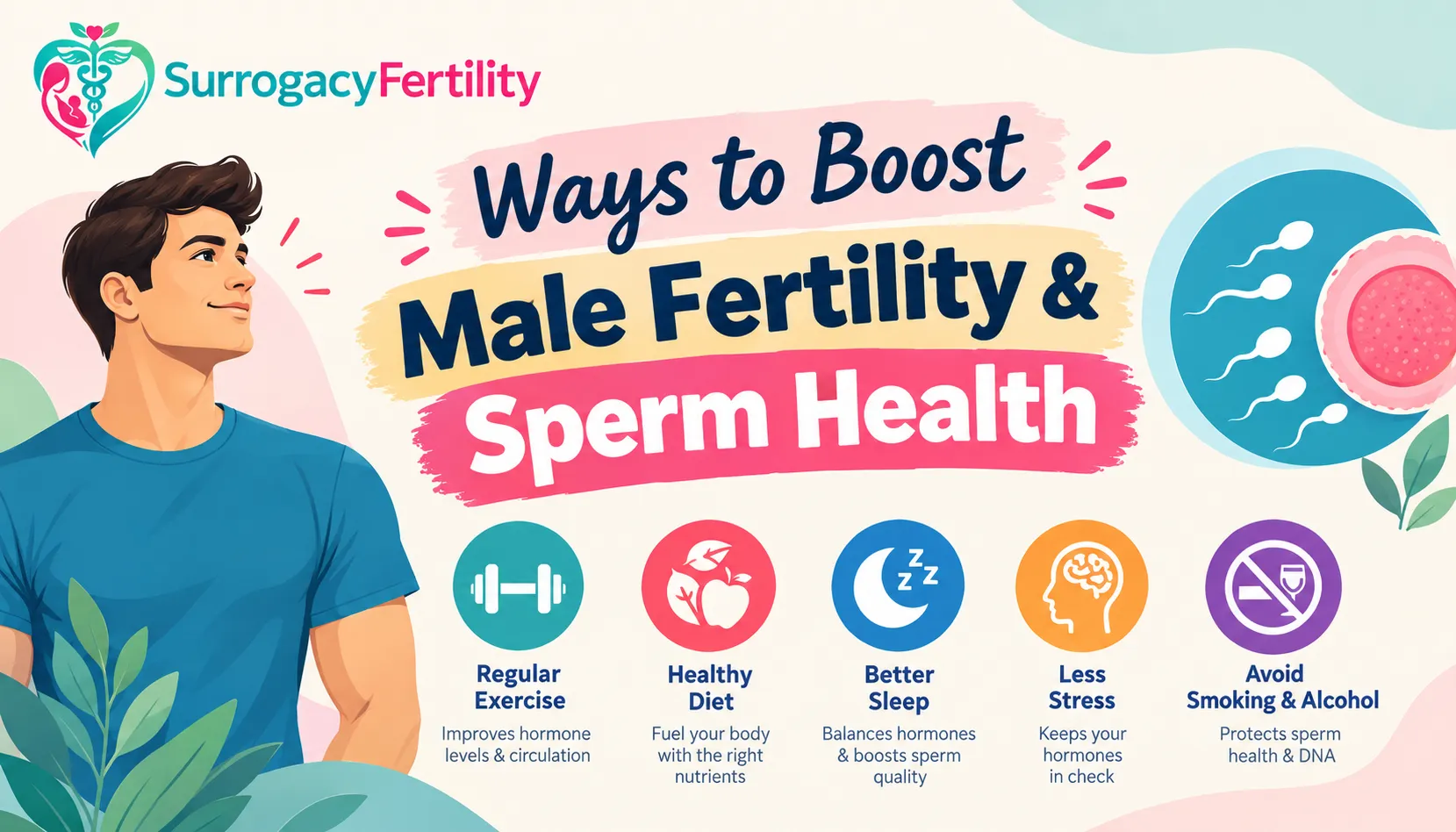
Struggling to conceive isn’t always about the female partner.
- Poor semen quality and unhealthy sperm production are the leading causes of male infertility.
- Male-factor issues contribute to about half of all fertility problems couples face.
- The good news: many of these factors can be improved with the right daily habits.
This guide covers simple, practical ways to boost male fertility and sperm health — in plain, easy-to-follow terms.
What Is Male Infertility?
Male infertility means a man’s sperm isn’t able to fertilize an egg effectively.
- It’s usually linked to poor semen quality (the fluid that carries sperm).
- It can also be linked to unhealthy sperm production in the testicles.
- It is one of the most common — and most overlooked — reasons couples struggle to get pregnant.
What Makes Sperm "Healthy"? (3 Key Factors)
For sperm to successfully fertilize an egg, it needs to pass three tests:
- Count — at least 15 million sperm per milliliter of semen.
- Motility — the sperm’s ability to move and swim properly.
- Shape and structure — normally shaped sperm can survive the journey through the female reproductive tract; oddly shaped sperm often can’t.
If any one of these three is off, natural conception becomes harder.
What Causes Poor Sperm Quality?
Poor sperm quality doesn’t always have one single cause.
- Hormonal imbalances — when the body’s reproductive hormones aren’t at the right levels.
- Testicular issues — problems in the testicles, where sperm is actually made.
- Daily lifestyle habits — often the biggest and most fixable factor.
Why does lifestyle matter so much?
Because unlike hormonal or testicular issues, lifestyle habits are within your control — and small changes can genuinely improve sperm count and motility.
Read More: Common Causes of Male Infertility
How to Improve Sperm Count and Motility
These are habit-based changes that directly support sperm health:
- Quit smoking completely.
- Cut down on excessive alcohol.
- Maintain a healthy body weight.
- Exercise regularly.
- Manage daily stress levels — ongoing stress can work against fertility.
Why does keeping testicles cool matter?
Sperm production works best at a temperature slightly cooler than normal body temperature. Overheating the testicles can lower sperm quality.
To avoid overheating:
- Skip tight-fitting underwear or clothing.
- Avoid frequent saunas and hot tubs.
- Don’t rest a laptop directly on your lap for long periods
Best Time to Have Sex When Trying to Conceive
Direct answer: You don’t need daily intercourse to conceive.
- Having sex every 2–3 days during the female partner’s ovulation window is considered ideal.
- This timing keeps sperm quality high without overexertion.
Are regular lubricants safe when trying to conceive?
No. Standard lubricants can damage sperm viability and movement.
- Avoid regular lubricants during the fertile window.
- Use sperm-friendly lubricants instead, if needed.
When Should You See a Doctor About Fertility?
Direct answer: If pregnancy hasn’t happened after one year of regular, unprotected attempts, it’s time to consult a doctor.
A doctor visit at this stage typically involves:
- Sperm quality evaluation.
- A review of current medications — some, like anabolic steroids or antidepressants, can affect fertility.
This is often the point where couples start looking for reliable, judgment-free guidance rather than guessing on their own. A platform like SurrogacyFertility can help here — it’s a free, unbiased consultation service (not a clinic) that connects intended parents with verified, ART-registered fertility clinics across Delhi NCR and India, offers clear cost breakdowns with no hidden charges, and explains legal guidance under the Surrogacy (Regulation) Act, 2021 in simple language, all at no cost to the family.
Do Supplements Help Sperm Health?
Direct answer: A balanced diet generally covers what the body needs — but certain supplements may offer added support, under medical guidance.
Supplements linked to sperm health include:
- Vitamin C
- Vitamin D
- Vitamin E
- Folic acid
- Zinc
- L-carnitine
- CoQ10
These should only be taken under medical guidance, not self-prescribed.
Frequently Asked Questions(FAQS)
Male infertility is primarily caused by poor semen quality and unhealthy sperm production, contributing to nearly half of all fertility issues in couples. Contributing factors include hormonal imbalances, testicular issues, and daily lifestyle habits such as smoking, excessive alcohol consumption, poor diet, lack of exercise, and prolonged testicular heat exposure.
A healthy sperm count is at least 15 million sperm per milliliter of semen. Beyond count, sperm must also demonstrate proper motility (movement ability) and normal shape and structure to successfully survive the journey through the female reproductive tract and fertilize an egg.
Men can improve sperm count and motility by quitting smoking, limiting alcohol intake, maintaining a healthy body weight, and exercising regularly. Avoiding testicular overheating from tight clothing, saunas, hot tubs, and laptops resting on the lap, along with managing daily stress, further supports healthy sperm production.
Couples trying to conceive do not need daily intercourse. Having sex every two to three days during the female partner's ovulation window is considered ideal for conception, as this frequency supports optimal sperm quality while maximizing the chances of fertilization during the fertile window.
Couples should consult a doctor if pregnancy hasn't occurred after one year of regular, unprotected attempts. A doctor typically evaluates sperm quality and reviews current medications, since drugs like anabolic steroids or antidepressants can negatively affect male fertility and reproductive outcomes.
2 Comments
Sperm Blockage: Causes, Signs & Treatment | Male Infertility
September 16, 2026[…] While a physical obstruction can’t be resolved through lifestyle changes alone, environmental and lifestyle factors do play a meaningful role in overall sperm health. Read More:Ways to Boost Male Fertility & Sperm Health […]
How To Check Sperm Count At Home: Simple Guide & Kit Tips | Surrogacy Fertility
September 16, 2026[…] (Read More: Ways to Boost Male Fertility & Sperm Health) […]