
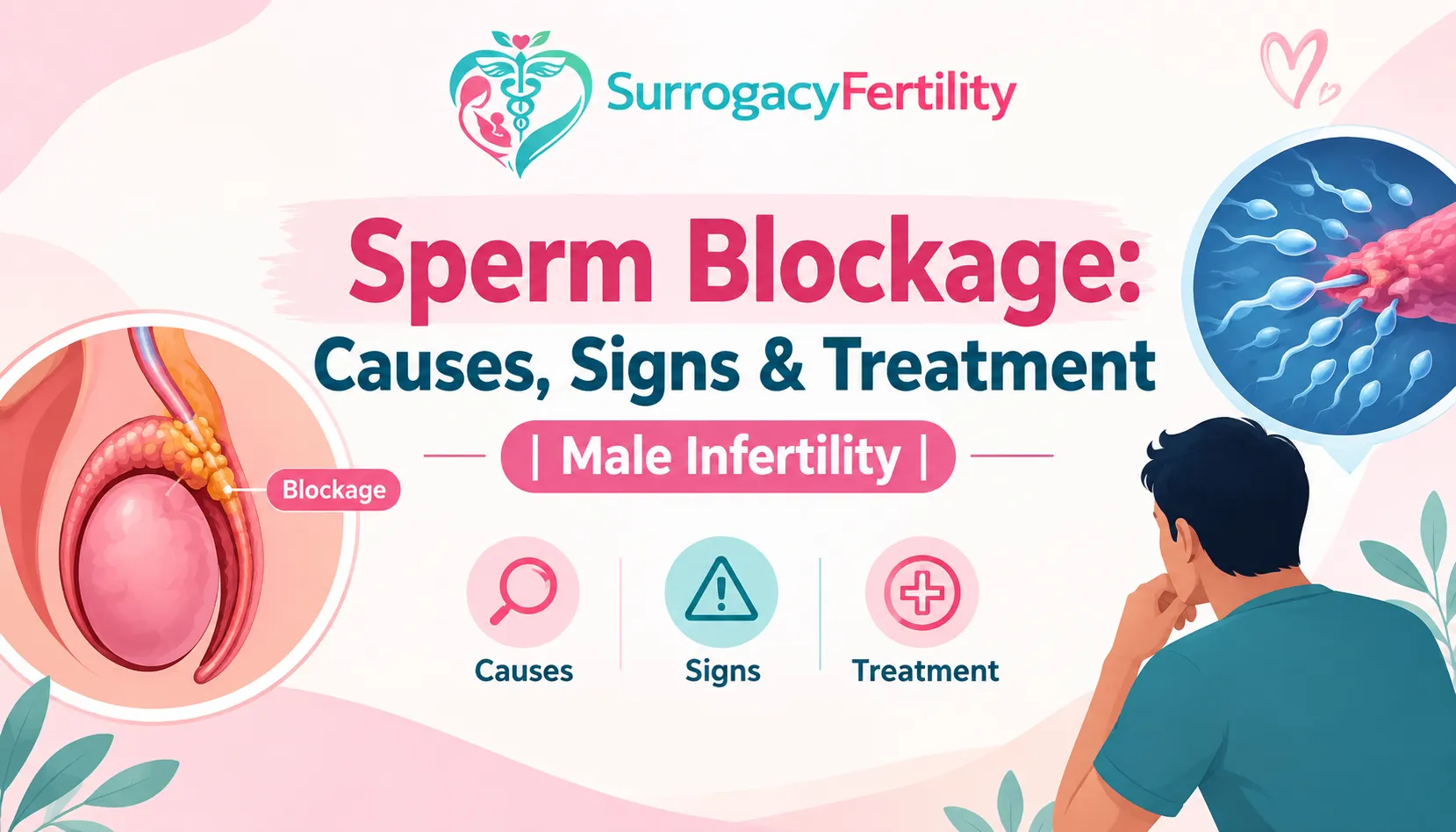
What Is Sperm Blockage?
Sperm blockage, medically known as ejaculatory duct obstruction, is a condition where the ducts that carry sperm from the testicles to the urethra become blocked. It is one of the significant, and often overlooked, contributors to male infertility.
Sperm are produced in the testicles and carry the genetic material required to fertilize a female egg. For natural conception to occur, this sperm must travel unobstructed through the reproductive ducts and be present in adequate numbers in the ejaculate. When a blockage interrupts this pathway, it can lead to:
- Azoospermia — zero sperm count in the ejaculate, despite normal sperm production in the testicles
- Low semen volume, making conception difficult even when sperm production itself is healthy
In simple terms: the sperm are being made, but they can’t get where they need to go. This distinguishes ejaculatory duct obstruction from other forms of male infertility where sperm production itself is impaired.
What Causes Sperm Blockage?
The causes of sperm blockage generally fall into three broad categories:
1. Medical Causes
- Repeated or chronic infections in the reproductive tract
- Localized swelling or inflammation affecting the ducts
- Prior vasectomy surgery
- Congenital (birth) defects in the development of the reproductive ducts
2. Environmental Causes
- Prolonged exposure of the scrotum to high temperatures, which can negatively affect overall fertility and duct health
3. Lifestyle Factors
- General lifestyle choices and daily habits that influence long-term reproductive health
Understanding which category applies to an individual case is an important first step, and it typically requires a proper medical evaluation rather than guesswork.
While a physical obstruction can’t be resolved through lifestyle changes alone, environmental and lifestyle factors do play a meaningful role in overall sperm health. Read More:Ways to Boost Male Fertility & Sperm Health
What Are the Signs of Weak Sperm and Sperm Blockage?
Many men ask what are the signs of weak sperm or reduced fertility, and sperm blockage often presents with a distinct set of symptoms that differ from general low sperm quality. Recognizing these signs early can make a meaningful difference in the timeliness of diagnosis and treatment.
Common signs and symptoms of sperm blockage include:
- Low ejaculate volume — typically under 1.5 ml per ejaculation
- Azoospermia — a complete absence of sperm in the semen sample
- Pain during or after sexual intercourse, caused by pressure buildup within the blocked ducts
- Persistent pelvic or prostate pain, which may occur continuously or be triggered by physical activity
- Blood in the semen (hematospermia)
- Blood in the urine (hematuria), which can occur if the obstruction irritates nearby urinary structures
If you notice one or more of these signs, it is a strong indicator that a fertility evaluation is needed rather than an assumption that it will resolve on its own.
Why These Symptoms Matter
Unlike some fertility issues that are silent and only discovered during a fertility workup, sperm blockage often produces noticeable physical symptoms. This makes early recognition especially valuable — the sooner the obstruction is identified, the sooner a treatment plan can be put in place.
How Is Sperm Blockage Treated?
The good news is that ejaculatory duct obstruction is often treatable through modern, minimally invasive medical procedures. The two primary interventions are:
Seminal Vesiculoscopy
A small telescope-like instrument is passed into the prostate area to directly visualize and clear the obstruction within the ducts.
Transurethral Resection of the Ejaculatory Ducts (TURED)
A surgical procedure used to remove cysts or more severe blockages that are restricting sperm flow.
These two procedures are often combined for optimal results, and together they offer a viable path toward overcoming this specific cause of infertility. Recovery time for these interventions is typically around one week, after which many men see meaningful improvement in semen volume and sperm presence in the ejaculate.
Sperm blockage is just one cause among several treatable forms of male infertility, and the right procedure depends entirely on the underlying diagnosis. Read More:What Is the Best Treatment for Male Fertility?
Frequently Asked Questions(FAQS)
In many cases, yes. Procedures like seminal vesiculoscopy and TURED are specifically designed to clear or bypass the obstruction, often restoring normal sperm flow.
No. Low sperm count (oligospermia) usually reflects a production issue in the testicles, while sperm blockage is a transport issue — sperm are produced normally but cannot reach the ejaculate due to a physical obstruction.
Recovery from procedures such as seminal vesiculoscopy or TURED typically takes about one week.
Consult a fertility specialist for proper diagnosis through semen analysis and imaging. Early evaluation allows for timely, targeted treatment.
Getting the Right Guidance for Male Infertility
Male infertility — including sperm blockage — is treatable in most cases, but the right outcome depends heavily on getting an accurate diagnosis and connecting with specialists experienced in these specific procedures.
This is where informed, unbiased guidance makes a real difference. Navigating fertility treatment can feel overwhelming: understanding which specialist to consult, what tests are needed, what treatment will actually cost, and which clinics are equipped to handle procedures like TURED or seminal vesiculoscopy are all questions that deserve honest, pressure-free answers.
A trusted consultation platform can help by:
- Connecting you with experienced fertility specialists and ICSI or ICSI-adjacent treatment experts for male infertility cases in Delhi
- Explaining diagnostic and treatment options in clear, simple language — without medical jargon or sales pressure
- Providing transparent cost guidance with no hidden charges
- Offering support from the very first consultation through complete treatment planning
Male infertility, including conditions like sperm blockage, does not have to mean the end of the road toward parenthood. With the right diagnosis and access to verified specialists, many men go on to father biological children through timely medical intervention or assisted reproductive technologies such as IVF or ICSI when required.
If you’re experiencing symptoms like low ejaculate volume, pelvic discomfort, or have been told you have azoospermia, the most important next step is a proper consultation — not delay. Reach out for a free, no-pressure consultation to understand your options and get matched with the right specialist for your specific case.
2 Comments
How To Check Sperm Count At Home: Simple Guide & Kit Tips | Surrogacy Fertility
September 16, 2026[…] (Read More: Sperm Blockage: Causes, Signs & Treatment | Male Infertility) […]
Male Infertility Is Common In India, Especially Post-COVID | Surrogacy Fertility
September 23, 2026[…] Read More: Sperm Blockage: Causes, Signs & Treatment | Male Infertility […]