
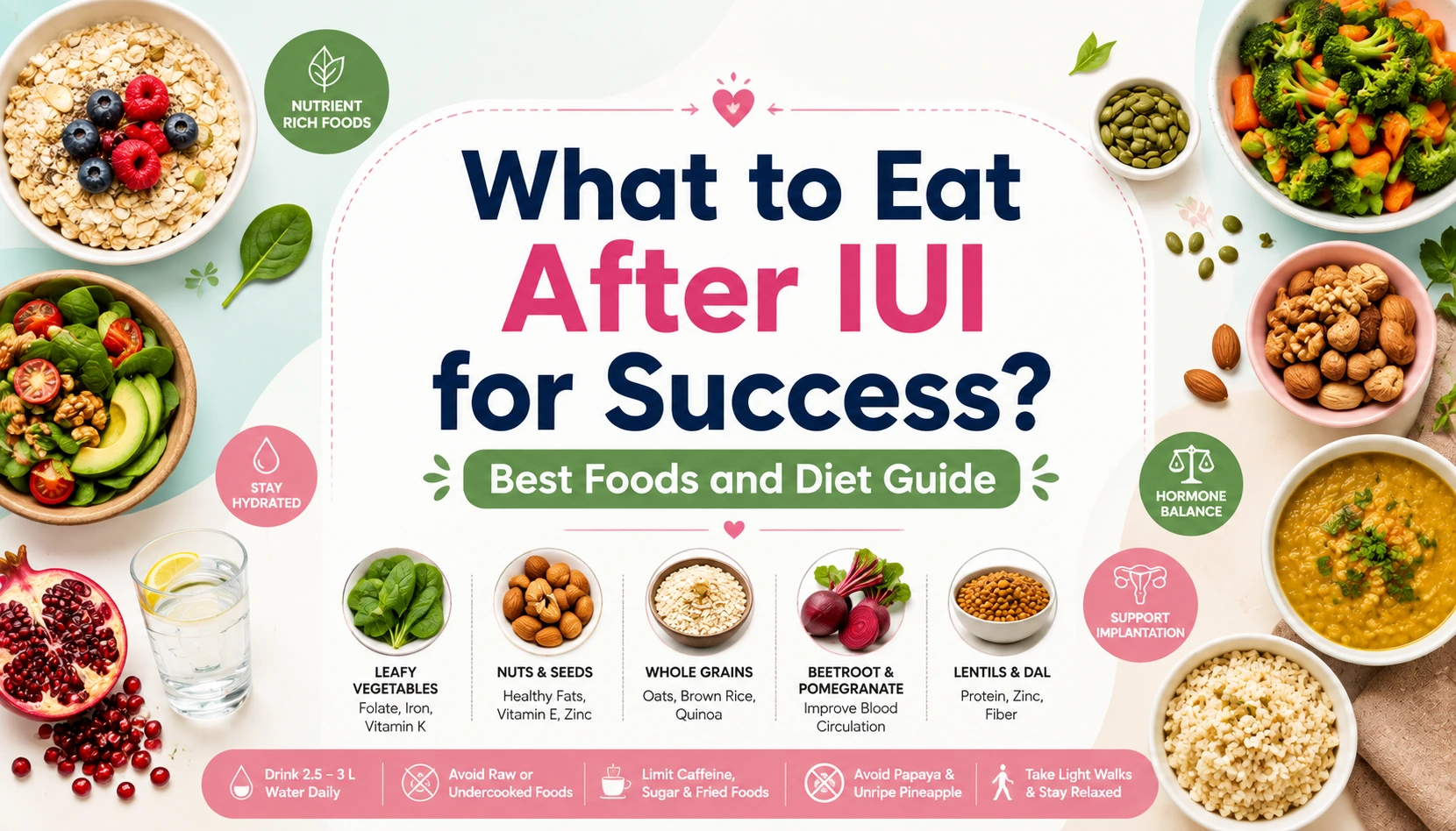
After an IUI (Intrauterine Insemination) procedure, many people become more conscious about their diet and wonder what they should eat to support their body during the implantation period. The days following IUI are an important time when the body needs adequate nutrition, hydration, and a balanced diet. Choosing nutrient-rich foods can support overall reproductive health, hormonal balance, blood circulation, and the body’s nutritional needs during this stage.
READ MORE : What Is IUI Treatment? How It Works and When Recommended
A healthy post-IUI diet should focus on warm, easily digestible foods, healthy fats, complex carbohydrates, fiber, and essential nutrients such as folate, zinc, omega-3 fatty acids, and vitamin E. At the same time, it is helpful to limit foods that may contribute to inflammation, digestive discomfort, or poor dietary quality.
What Should You Eat After IUI?
There is no single food that can guarantee implantation or pregnancy after IUI. However, a nutritious and balanced diet can help support the body’s overall needs during the post-IUI period. The following food choices are highlighted in the provided dietary guidance for the implantation period.
1. Choose Warm and Cooked Foods
Warm and easily digestible foods are emphasized after IUI. Foods such as dal-rice, khichdi, cooked vegetables, and warm soups can be comfortable choices during this period.
The idea behind choosing warm foods is to support comfortable digestion and maintain a nourishing dietary routine. Instead of relying heavily on cold or difficult-to-digest foods, meals can be simple, freshly prepared, and easy on the stomach.
For example, a bowl of warm khichdi with cooked vegetables can provide carbohydrates, protein, and other nutrients while remaining relatively easy to digest.
2. Include Healthy Fats
Healthy fats are another important part of a balanced post-IUI diet. Foods such as avocados, soaked almonds, walnuts, pumpkin seeds, and moderate amounts of pure ghee can be included in meals.
Healthy fats are associated in the source material with supporting progesterone and the uterine lining. Rather than consuming large quantities of fatty foods, focus on nutrient-dense sources and moderate portions.
You can add walnuts or pumpkin seeds to breakfast, include avocado in a meal, or use a small amount of ghee with traditional home-cooked foods.
3. Eat Foods Rich in L-Arginine and Support Blood Circulation
Good blood circulation is important during the implantation period, and the provided dietary guidance highlights foods containing L-arginine and other nutrients associated with circulation.
Beetroot, pomegranate, and green leafy vegetables are recommended options. These foods can be incorporated into a balanced daily diet through cooked vegetables, salads where appropriate, or fresh preparations.
The source specifically suggests beetroot-pomegranate juice as a dietary option. However, overall dietary variety is important, so these foods can also be consumed as part of regular meals rather than relying on one particular drink.
4. Choose Complex Carbohydrates and High-Fiber Foods
Hormonal changes after IUI may be accompanied by digestive issues such as bloating or constipation. Including fiber-rich complex carbohydrates can help maintain a balanced diet.
Good options mentioned in the source include:
- Oats
- Brown rice
- Quinoa
- Seasonal vegetables
These foods can be combined with protein-rich foods and healthy fats to create balanced meals. For example, oats can be eaten at breakfast, while brown rice or quinoa can be paired with cooked vegetables and lentils for lunch or dinner.
Important Nutrients to Include After IUI
Certain micronutrients are highlighted in the dietary guidance because of their roles in cell development, tissue support, and overall reproductive nutrition.
Zinc
Zinc supports cell division and tissue repair. Food sources mentioned include pumpkin seeds, sesame seeds, and lentils.
Folate (Vitamin B9)
Folate is important for early embryonic development. Spinach, broccoli, and chickpeas are useful food sources mentioned in the source material.
Omega-3 Fatty Acids
Omega-3 fatty acids are associated with helping reduce inflammation. Walnuts, chia seeds, and flaxseeds can provide dietary sources of omega-3 fatty acids.
Vitamin E
Vitamin E is highlighted for its potential role in supporting uterine lining quality. Sunflower seeds, almonds, and spinach are listed as food sources.
Including a variety of these foods is generally more practical than focusing on one nutrient or one particular food.
What Foods Should You Avoid After IUI?
Along with knowing what to eat after IUI, it is also important to understand which foods the provided guidance recommends limiting or avoiding.
Avoid Raw or Undercooked Foods
Raw or insufficiently cooked foods, including raw salads and half-cooked eggs, are highlighted because of the potential risk of bacterial contamination. Proper food preparation and hygiene are therefore important during this period.
Choose thoroughly cooked meals and ensure that eggs and other foods requiring cooking are properly prepared.
Limit Trans Fats and Excess Sugar
Bakery products, fried foods, and sugary cold drinks are recommended to be limited. A diet high in these foods may contribute to poor overall nutritional quality and inflammation.
Instead, prioritize home-cooked meals, vegetables, whole grains, lentils, nuts, seeds, and other nutrient-dense foods.
Limit Excess Caffeine
The provided guidance recommends limiting caffeine and keeping tea or coffee to no more than one cup per day. If you regularly consume caffeinated beverages, keeping intake moderate can help you follow a more cautious post-IUI dietary routine.
Avoid Papaya and Unripe Pineapple
The source specifically recommends avoiding papaya and unripe pineapple during the post-IUI period because of concerns about compounds that may contribute to uterine contractions.
It also distinguishes this from pineapple core, which is discussed separately as a source of bromelain.
Can You Eat Pineapple After IUI?
The provided dietary guidance specifically discusses the pineapple core because it contains bromelain, a naturally occurring enzyme associated in the source with anti-inflammatory effects and blood circulation.
It suggests consuming a small piece of pineapple core daily for five days after IUI and cautions against excessive consumption.
Because dietary responses can vary, pineapple should not be considered a treatment or a guarantee of implantation. The key principle is to maintain a balanced diet rather than depending on a single food.
How Much Water Should You Drink After IUI?
Hydration is emphasized as an important part of the post-IUI routine. The provided guidance recommends approximately 2.5 to 3 liters of water daily.
Adequate hydration can be maintained by drinking water regularly throughout the day instead of waiting until you feel very thirsty. Along with water, nutrient-rich foods such as vegetables, fruits, soups, and other balanced meals can contribute to overall fluid intake.
What Should Your Daily Routine Look Like After IUI?
Diet is only one part of maintaining a healthy routine after IUI. The source also recommends light walking without placing heavy pressure on the abdomen. Gentle movement can help maintain regular activity and support circulation.
A simple routine can include:
- Eating freshly prepared, balanced meals.
- Including vegetables, whole grains, lentils, nuts, and seeds.
- Drinking approximately 2.5–3 liters of water daily.
- Choosing properly cooked foods.
- Limiting fried foods, excess sugar, and caffeine.
- Avoiding raw or undercooked foods.
- Including sources of folate, zinc, omega-3 fatty acids, and vitamin E.
- Taking light walks without heavy abdominal pressure.
READ MORE : What to do after IUI for success: Two-Week Wait Guide Today!
Sample Food Choices After IUI
A simple post-IUI eating pattern can include warm and nutritious meals throughout the day. For breakfast, options such as oats with nuts and seeds can provide complex carbohydrates, fiber, and healthy fats. Lunch can include brown rice or quinoa with dal and cooked vegetables. A snack may include walnuts, almonds, pumpkin seeds, or fruit. Dinner can consist of khichdi, dal-rice, cooked vegetables, or a warm soup.
The goal should not be to follow an extremely restrictive diet. Instead, focus on variety, balanced nutrition, adequate hydration, and foods that are comfortable and easy to digest.
Final Thoughts
Knowing what to eat after IUI for success can help you make more mindful dietary choices during the post-IUI period. A balanced diet can include warm cooked foods, healthy fats, complex carbohydrates, fiber-rich foods, and nutrient sources such as zinc, folate, omega-3 fatty acids, and vitamin E. Beetroot, pomegranate, leafy vegetables, lentils, nuts, seeds, oats, brown rice, quinoa, and cooked vegetables are among the food choices highlighted in the provided guidance.
At the same time, it is important to avoid raw or undercooked foods, limit trans fats and excess sugar, moderate caffeine, and avoid papaya and unripe pineapple according to the source guidance. Staying adequately hydrated and maintaining gentle physical activity can also form part of a healthy post-IUI routine.
Most importantly, no single food can guarantee implantation or pregnancy after IUI. Nutrition should be viewed as supportive rather than as a substitute for individualized fertility care. If you are undergoing IUI and have specific dietary needs related to your individual circumstances, discuss your diet and treatment routine with your fertility care team.
For people seeking fertility treatment guidance, Surrogacy Fertility can help make the journey easier to understand by providing guidance on available fertility treatment options and connecting patients with verified fertility clinics and specialists based on their individual needs and circumstances.
FAQs (Frequently Asked Questions)
After IUI, focus on a balanced diet with warm cooked foods, vegetables, lentils, whole grains, healthy fats, nuts, and seeds. Foods such as oats, brown rice, quinoa, dal, khichdi, beetroot, pomegranate, and leafy green vegetables can provide important nutrients during the post-IUI period. No single food can guarantee implantation or pregnancy.
Important nutrients highlighted for the post-IUI diet include zinc, folate (vitamin B9), omega-3 fatty acids, and vitamin E. Food sources include pumpkin seeds, sesame seeds, lentils, spinach, broccoli, chickpeas, walnuts, chia seeds, flaxseeds, almonds, and sunflower seeds. Including a variety of these foods can support overall nutritional needs.
The provided dietary guidance recommends avoiding raw or undercooked foods, including half-cooked eggs, and limiting trans fats, fried foods, bakery products, excess sugar, and excessive caffeine. It also recommends avoiding papaya and unripe pineapple during the post-IUI period. Properly cooked, freshly prepared meals are preferred.
The dietary guidance specifically discusses pineapple core because it contains bromelain and suggests consuming a small piece daily for five days after IUI. It recommends avoiding excessive consumption and distinguishes pineapple core from unripe pineapple, which should be avoided according to the provided guidance. Pineapple should not be considered a guarantee of implantation.
The provided post-IUI dietary guidance recommends approximately 2.5 to 3 liters of water daily. Staying adequately hydrated can be part of a healthy routine after IUI. Along with hydration, the guidance recommends balanced meals, nutrient-rich foods, and light walking without placing heavy pressure on the abdomen.