
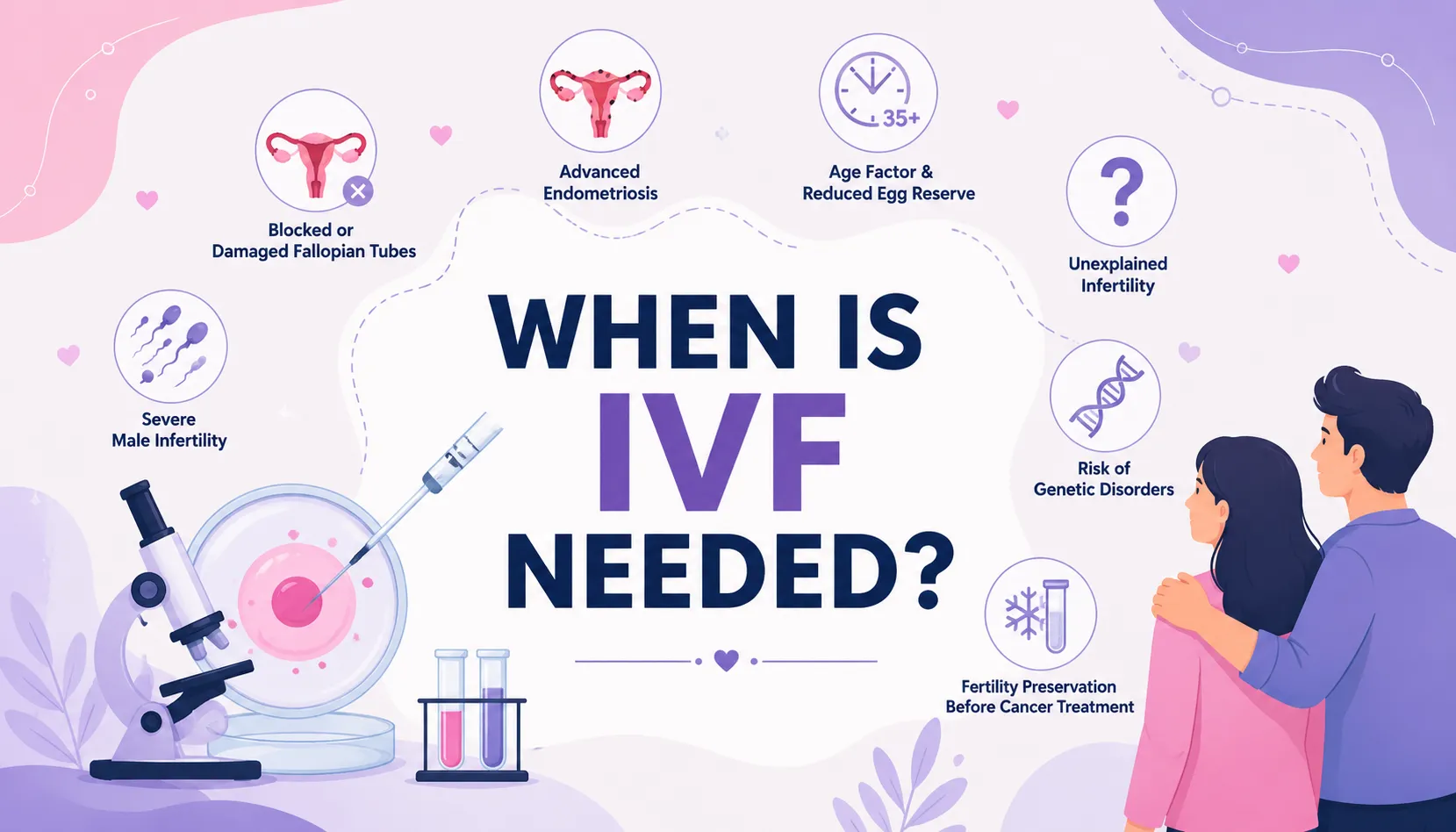
Many couples who experience difficulty conceiving naturally often wonder whether IVF is the right solution. While In Vitro Fertilization (IVF) is one of the most advanced fertility treatments available, it is not the first treatment recommended for every infertility case. In many situations, doctors first suggest lifestyle changes, medications, or simpler fertility treatments before considering IVF.
IVF is generally recommended when natural conception becomes difficult due to specific medical conditions or when previous fertility treatments have not been successful. Understanding when IVF is truly needed can help couples make informed decisions and avoid unnecessary confusion during their fertility journey.
How Does Natural Pregnancy Happen?
For a natural pregnancy to occur, several important steps must happen successfully. A healthy egg must be released from the ovary, the fallopian tubes should be open so that the egg and sperm can meet, the sperm should be healthy enough to reach and fertilize the egg, and the uterus should have a healthy lining where the embryo can implant and grow.
If any of these steps are affected by a medical condition, pregnancy may become difficult, and fertility treatments such as IVF may be recommended.
When Is IVF Recommended?
1. Blocked or Damaged Fallopian Tubes
The fallopian tubes are where fertilization normally takes place. If they are blocked or severely damaged due to infections, previous surgeries, or other medical conditions, the egg and sperm cannot meet naturally. In such cases, IVF bypasses the fallopian tubes by fertilizing the egg in a laboratory and transferring the resulting embryo directly into the uterus.
2. Severe Male Infertility
Male infertility contributes to a significant number of infertility cases. Conditions such as very low sperm count, poor sperm movement, or the complete absence of sperm in the semen can make natural conception extremely difficult. In these situations, IVF combined with advanced laboratory techniques can help fertilize the egg using a healthy sperm, significantly improving the chances of pregnancy.
3. Advanced Endometriosis
Endometriosis is a condition in which tissue similar to the uterine lining grows outside the uterus. It can affect the ovaries, fallopian tubes, and surrounding pelvic organs, leading to inflammation and reduced fertility. In moderate to severe cases, IVF is often recommended because natural fertilization becomes more challenging.
4. Increasing Age and Reduced Egg Reserve
Female fertility naturally declines with age, particularly after the age of 35. As both the quality and quantity of eggs decrease, the chances of natural conception also become lower. For women with a reduced ovarian reserve or advanced maternal age, IVF may provide a better opportunity to achieve pregnancy without losing valuable time.
5. Unexplained Infertility
Sometimes, all fertility investigations—including hormone tests, semen analysis, ultrasound examinations, and tubal evaluation—appear normal, yet pregnancy does not occur despite trying for several years. If simpler fertility treatments have not been successful, IVF often becomes the next recommended treatment option.
6. Risk of Genetic Disorders
Couples who carry inherited genetic conditions may choose IVF to reduce the risk of passing certain disorders to their child. Through advanced embryo testing before embryo transfer, healthy embryos can be identified before pregnancy is established.
7. Fertility Preservation Before Cancer Treatment
Cancer treatments such as chemotherapy and radiation may permanently affect fertility. Individuals planning cancer treatment may preserve their eggs, sperm, or embryos beforehand so they can use IVF in the future when they are ready to build their family.
Common Misconceptions About IVF
One of the biggest myths is that every couple with infertility needs IVF immediately. In reality, IVF is usually considered only after appropriate medical evaluation and when simpler treatment options are unlikely to succeed or have already failed.
Another misconception is that IVF babies are “artificial.” In fact, the embryo develops from the intended parents’ egg and sperm. Fertilization takes place in a controlled laboratory environment, but the pregnancy continues naturally inside the uterus just like any other pregnancy.
How Can the Right Guidance Help?
Choosing IVF is an important medical decision that should always be based on a proper fertility assessment rather than assumptions. Every couple has different medical needs, fertility history, and treatment goals. Understanding the underlying cause of infertility is the first step toward selecting the most appropriate treatment.
At SurrogacyFertility, we help intended parents understand their fertility options by connecting them with verified ART-registered fertility clinics across India. Our team provides transparent consultation, explains available treatment options, offers guidance on legal and medical processes where applicable, and helps families make informed decisions based on their individual circumstances—all with a focus on honesty, clarity, and ethical care.
Conclusion
IVF is a highly effective fertility treatment, but it is not the starting point for every infertility journey. It is most commonly recommended for conditions such as blocked fallopian tubes, severe male infertility, advanced endometriosis, reduced ovarian reserve, unexplained infertility after unsuccessful treatments, genetic concerns, or fertility preservation before cancer therapy. A comprehensive fertility evaluation can determine whether IVF is the most suitable option and help couples move forward with confidence toward their parenthood goals.
Frequently Asked Questions (FAQs)
IVF treatment is usually recommended when pregnancy cannot be achieved naturally due to specific medical conditions such as blocked fallopian tubes, severe male infertility, advanced endometriosis, reduced ovarian reserve, unexplained infertility after unsuccessful treatments, or fertility preservation before cancer treatment. A proper fertility evaluation helps determine whether IVF is the most appropriate option.
No. IVF is generally not the first treatment for infertility. Depending on the underlying cause, healthcare professionals may initially recommend lifestyle modifications, ovulation-inducing medications, or intrauterine insemination (IUI). IVF is typically considered when these approaches are unsuccessful or when there are significant structural or biological fertility issues.
Yes. IVF can be an effective treatment for severe male infertility, including cases involving low sperm count, poor sperm motility, or the absence of sperm in the semen. Advanced laboratory techniques used during IVF can assist fertilization and improve the chances of achieving a successful pregnancy.
Yes. Female fertility naturally declines with age, especially after 35, as both egg quality and ovarian reserve decrease. For women with age-related fertility decline, IVF may be recommended sooner because delaying treatment can further reduce the chances of conception.
Yes. Some couples experience unexplained infertility, where routine fertility tests appear normal but pregnancy does not occur despite trying for an extended period. If other fertility treatments, such as multiple IUI cycles, are unsuccessful, IVF may become the next recommended treatment option.
1 Comment
Disadvantages Of IVF Babies: What Every Parent Should Know Before Starting IVF
September 14, 2026[…] Key takeaway: IVF does not independently cause birth defects. The same genetic and biological factors that affect naturally conceived pregnancies apply equally to IVF pregnancies.Many parents also wonder how IVF differs from what is commonly called a “test tube baby” — and whether the method of conception changes any of these risks. READ MORE: IVF vs Test Tube Baby — What’s the Real Difference? Before understanding the disadvantages, it is equally important to know whether IVF is the right treatment for you in the first place. Knowing the key signs that indicate the need for IVF can help families make better and more informed medical decisions. READ MORE: When Do You Need IVF — Key Signs Explained […]