
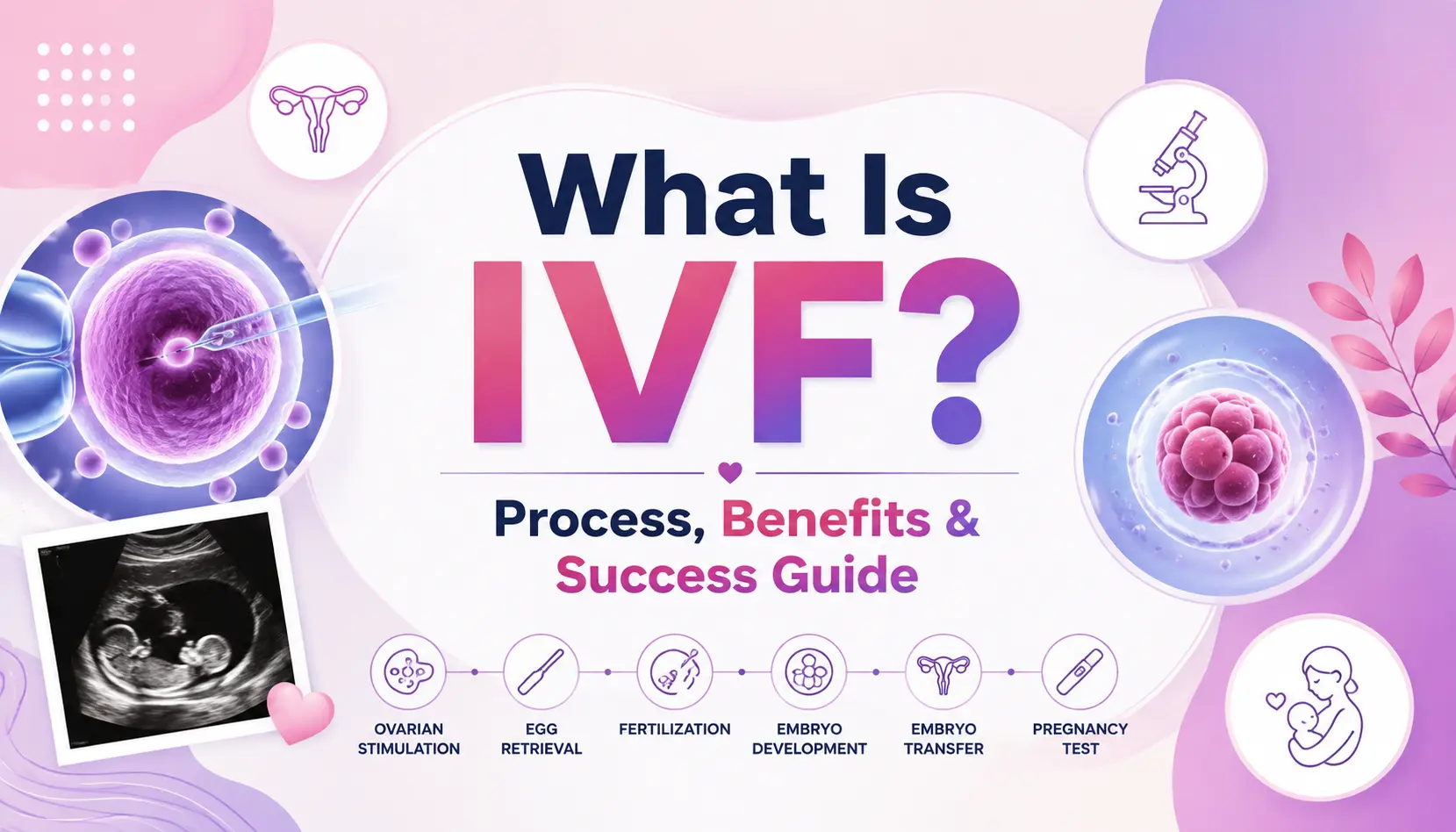
What Is IVF?
In Vitro Fertilization (IVF) is an advanced fertility treatment that helps people achieve pregnancy when natural conception becomes difficult. It is one of the most widely used forms of Assisted Reproductive Technology (ART). In IVF, fertilization takes place in a specialized laboratory instead of inside the body. Once a healthy embryo develops, it is transferred into the uterus, where the pregnancy continues naturally.
Simply put, IVF helps overcome obstacles that prevent the egg and sperm from meeting naturally. While fertilization occurs in a controlled laboratory environment, the baby continues to grow in the uterus just like in a naturally conceived pregnancy.
For many individuals and couples struggling with infertility, IVF offers a medically supported path toward parenthood through a carefully planned and monitored treatment process.
How Does IVF Work?
A simple way to understand IVF is to imagine a blocked road preventing two people from meeting. IVF acts like an alternative route that safely brings the egg and sperm together when natural fertilization is not possible.
Unlike common misconceptions, IVF does not mean that the baby develops in a laboratory. Only the fertilization process occurs outside the body for a few days. After embryo transfer, the pregnancy develops inside the uterus exactly like any other pregnancy.
Step-by-Step IVF Process
IVF is not a one-day procedure. It usually takes around 4 to 6 weeks, involving several carefully monitored stages.
1. Ovarian Stimulation
Normally, a woman releases one egg during each menstrual cycle. During IVF treatment, fertility specialists prescribe hormonal medications for approximately 10–12 days to stimulate the ovaries and encourage multiple eggs to mature simultaneously.
Producing multiple mature eggs increases the chances of obtaining healthy embryos for transfer.
2. Egg Retrieval
Once the eggs reach maturity, they are collected through a minor ultrasound-guided procedure.
The procedure is performed under mild anesthesia, making it comfortable for the patient. Using a specialized needle, mature eggs are carefully retrieved from the ovaries. While many people are concerned about whether IVF treatment is painful, the experience is generally well-managed, and most patients report only mild discomfort during different stages of the procedure.
Read More: Is IVF Painful? What to Expect During IVF Treatment
3. Fertilization
On the same day, a sperm sample is collected.
Inside a highly controlled embryology laboratory, the eggs and sperm are combined to achieve fertilization.
If sperm quality or movement is poor, specialists may perform Intracytoplasmic Sperm Injection (ICSI), where a single healthy sperm is injected directly into the egg to improve the chances of fertilization.
4. Embryo Development
After successful fertilization, the fertilized egg begins dividing and develops into an embryo.
The embryos are carefully observed inside an incubator for approximately 3 to 5 days, allowing specialists to identify healthy embryos that reach the blastocyst stage.
5. Embryo Transfer
The healthiest embryo is selected for transfer into the uterus.
This is a simple and generally painless procedure that does not require surgery. The embryo is placed inside the uterus using a thin catheter, allowing implantation to occur naturally.
6. Pregnancy Test
Around 12 to 14 days after embryo transfer, a blood test (Beta-hCG) is performed to determine whether implantation has occurred and pregnancy has been achieved.
Who May Benefit from IVF?
IVF may be recommended in several medical situations where natural conception is difficult.
Read More: When Do You Need IVF? Key Signs Explained
Some of the common reasons include:
- Blocked Fallopian Tubes: When the fallopian tubes are blocked, the egg and sperm cannot meet naturally.
- Male Infertility: Low sperm count, poor sperm movement (motility), or abnormal sperm shape can reduce the chances of natural fertilization.
- Severe Endometriosis: This condition may affect the reproductive organs and interfere with conception.
- PCOS and Ovulation Disorders: When ovulation does not occur regularly or eggs fail to mature properly.
- Unexplained Infertility: Sometimes all fertility tests appear normal, yet pregnancy does not occur.
- Age-Related Fertility Decline: Egg quality naturally decreases with increasing maternal age, making IVF a suitable treatment option in certain cases.
Common Myths About IVF
Myth 1: IVF Babies Are "Test Tube Babies"
Reality: Only fertilization occurs in the laboratory for a few days. The baby develops inside the uterus throughout the pregnancy and is not raised in a laboratory environment.
Myth 2: IVF Always Results in Twins
Reality: Modern fertility treatment commonly prefers Single Embryo Transfer (eSET), which significantly increases the likelihood of a singleton pregnancy while reducing multiple pregnancy risks.
Myth 3: IVF Guarantees Pregnancy
Reality: No fertility treatment can guarantee pregnancy. IVF success depends on several medical factors, and success rates vary between individuals.
Factors That Influence IVF Success
Several factors contribute to IVF outcomes, including:
Woman's Age
Younger women, particularly those below 35 years, generally have better chances because egg quality tends to be higher.
Embryology Laboratory
Advanced laboratory facilities and experienced embryologists play a significant role in embryo development and treatment quality.
Lifestyle
Smoking, alcohol consumption, unmanaged stress, and poor dietary habits may negatively affect fertility and treatment outcomes.
Uterine Health
A healthy uterine lining is essential for successful embryo implantation and pregnancy development.
Why Choosing the Right Fertility Guidance Matters
Beginning fertility treatment can often feel overwhelming due to varying treatment options, changing regulations, and differences in clinic standards. Access to transparent information and verified medical guidance allows intended parents to understand their options with greater confidence.
SurrogacyFertility that connect families with verified fertility specialists can help simplify treatment planning, explain available procedures, and provide clear information about costs, legal considerations, and appropriate treatment pathways based on individual medical needs.
Conclusion
IVF has transformed fertility care by helping countless families pursue parenthood when natural conception is challenging. The treatment involves a carefully planned sequence of ovarian stimulation, egg retrieval, laboratory fertilization, embryo development, embryo transfer, and pregnancy testing. Although IVF cannot guarantee success, modern technology, experienced specialists, healthy embryos, and appropriate patient selection have significantly improved treatment outcomes.
If you are facing infertility due to blocked fallopian tubes, male infertility, ovulation disorders, endometriosis, unexplained infertility, or age-related fertility decline, consulting experienced fertility specialists can help you understand whether IVF is an appropriate option for your situation. With accurate information, realistic expectations, and personalized medical guidance, individuals and couples can make informed decisions on their journey toward parenthood.
Frequently Asked Questions (FAQs)
IVF (In Vitro Fertilization) is an Assisted Reproductive Technology (ART) that helps achieve pregnancy when natural conception is difficult. During IVF, fertilization takes place in a specialized laboratory, and the resulting embryo is transferred into the uterus, where the pregnancy continues naturally like any other pregnancy.
IVF may be recommended for individuals or couples experiencing blocked fallopian tubes, male infertility, severe endometriosis, PCOS or ovulation disorders, unexplained infertility, or age-related decline in egg quality. A fertility specialist evaluates the underlying cause before determining whether IVF is the most suitable treatment option.
A complete IVF cycle generally takes around 4 to 6 weeks. The process includes ovarian stimulation, egg retrieval, fertilization in a laboratory, embryo development, embryo transfer, and a pregnancy blood test approximately 12 to 14 days after the embryo transfer to confirm the treatment outcome.
No. Modern IVF treatment commonly uses Single Embryo Transfer (eSET), where one healthy embryo is transferred into the uterus. This approach reduces the likelihood of multiple pregnancies while maintaining good pregnancy outcomes based on the patient's medical condition and treatment plan.
IVF success depends on several medical and lifestyle factors, including the woman's age, egg quality, sperm quality, uterine health, laboratory standards, and overall lifestyle. Since every case is unique, success rates vary among individuals, and no fertility treatment can guarantee pregnancy.