
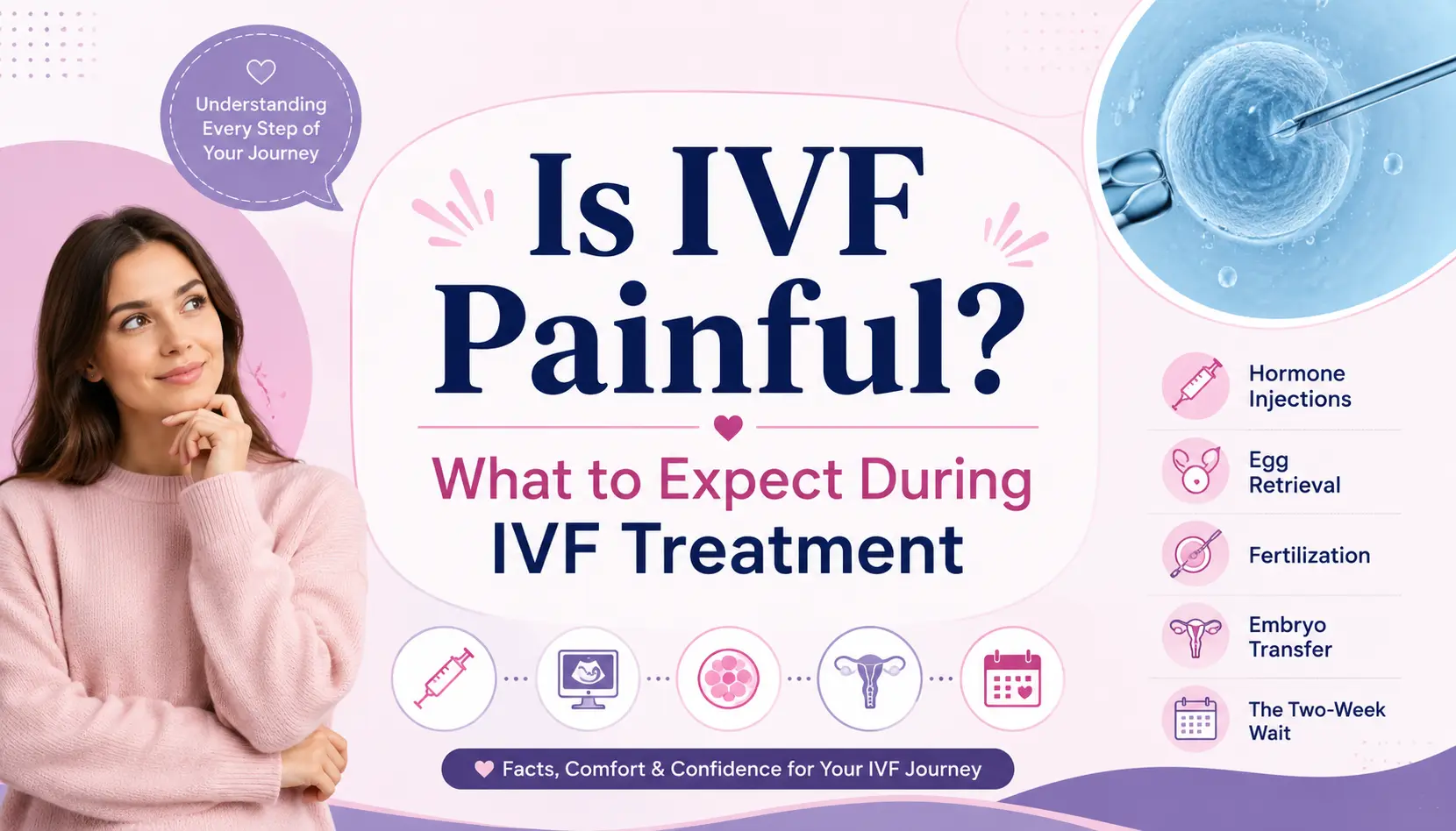
Is IVF Painful?
One of the biggest concerns people have before starting In Vitro Fertilization (IVF) is whether the treatment is painful. Many individuals imagine multiple painful injections, surgery, and a difficult recovery. These misconceptions often create unnecessary fear and even delay fertility treatment.
The reality is quite different.
IVF is generally not considered a painful procedure. Most patients experience mild discomfort rather than severe pain, and modern fertility treatments are designed to make the process as comfortable as possible.
While every person’s experience is unique, most women describe IVF as manageable. Some stages involve temporary bloating, cramping, or injection-site soreness, but unbearable pain is uncommon. In fact, many fertility specialists believe that the emotional aspects of IVF are often more challenging than the physical procedures themselves.
If you’re considering IVF, understanding each step of the journey can help reduce anxiety and prepare you for what lies ahead.
Before beginning IVF treatment, it’s important to know whether IVF is the right fertility option for your specific medical condition. Not every couple experiencing infertility requires IVF, and understanding the signs and situations where IVF is recommended can help you make an informed decision with your fertility specialist.
👉 Read More: When Do You Need IVF? Key Signs Explained
Quick Answer
Is IVF painful?
No. IVF is not usually painful. Most people experience only mild discomfort similar to menstrual cramps, bloating, or a small injection prick. Certain procedures, such as egg retrieval, are performed under mild sedation, meaning patients typically do not feel pain during the procedure itself.
The emotional stress of waiting for results often feels more difficult than the physical treatment.
Understanding the IVF Journey
IVF is not a one-day procedure. It is a carefully planned treatment that usually takes four to six weeks and involves several stages.
The main steps include:
- Ovarian stimulation
- Egg retrieval
- Fertilization in the laboratory
- Embryo transfer
- Pregnancy support and the two-week waiting period
Each stage has a different purpose and a different level of physical discomfort.
Step 1: Ovarian Stimulation
The first stage of IVF involves stimulating the ovaries so they produce multiple mature eggs instead of the single egg released during a normal menstrual cycle.
To achieve this, fertility specialists prescribe hormone injections that are taken daily for approximately 8–12 days.
Does the Injection Hurt?
Modern IVF injections are designed with very fine, pen-like needles. Most patients describe the sensation as similar to a tiny pinprick or mosquito bite that lasts only a few seconds.
Pain Level: ⭐⭐☆☆☆ (2/10)
As the ovaries begin producing multiple eggs, you may notice:
- Mild bloating
- A feeling of heaviness in the lower abdomen
- Slight pelvic pressure
- Temporary fullness
These symptoms occur because the ovaries become larger than usual and are considered a normal part of treatment.
Step 2: Egg Retrieval
Once the eggs have matured, they are collected through a short medical procedure known as egg retrieval.
Many people assume this is the most painful part of IVF, but that is usually not true.
The procedure is performed under mild sedation or short anesthesia, so patients generally do not feel pain while the eggs are being retrieved.
The entire procedure usually takes only 15–20 minutes.
What Happens Afterwards?
After the anesthesia wears off, some women may experience:
- Mild abdominal cramps
- Pelvic soreness
- Slight bloating
- Heaviness in the lower abdomen
These symptoms generally improve within 24–48 hours.
Pain During Procedure: ⭐☆☆☆☆ (Almost Zero)
Pain After Procedure: ⭐⭐⭐☆☆ (3/10)
Most patients recover quickly and return home the same day.
Step 3: Fertilization
After the eggs are collected, they are fertilized with sperm inside a specialized embryology laboratory.
Since this process happens outside the body, there is no physical discomfort for the patient during this stage.
The embryologists carefully monitor embryo development before selecting the healthiest embryo for transfer.
Step 4: Embryo Transfer
Embryo transfer is one of the easiest and least uncomfortable stages of IVF.
A very thin catheter is used to place the selected embryo into the uterus.
Unlike what many people expect, anesthesia is generally unnecessary because the procedure causes little to no pain.
Many women compare the experience to a routine gynecological examination.
The only noticeable discomfort usually comes from having a full bladder, which helps improve ultrasound visibility during the procedure.
Pain Level: ⭐☆☆☆☆ (1/10)
Most patients can resume normal activities shortly afterward.
The Two-Week Wait
Following embryo transfer comes the most emotionally challenging phase of IVF—the two-week waiting period.
During this time, hormone support continues through injections, gels, or oral medications to help support implantation and early pregnancy.
If progesterone injections are prescribed, patients may experience:
- Mild soreness
- Temporary swelling
- Tenderness around the injection site
These effects usually disappear within a short period.
While waiting for your pregnancy test results, it’s natural to worry about whether the treatment has worked. If an IVF cycle does not result in pregnancy, it doesn’t always mean future attempts will be unsuccessful. Understanding the possible medical reasons behind an unsuccessful IVF cycle can help you discuss the next steps with your fertility specialist.
👉 Read More: Why Did IVF Fail? Common Medical Reasons Explained
Physical Pain vs Emotional Stress
One surprising fact reported by many IVF patients is that the physical procedures are much easier than expected.
The emotional journey is often the real challenge.
Common emotional experiences include:
- Anxiety while waiting for pregnancy results
- Hormonal mood swings
- Irritability
- Mental fatigue
- Stress from frequent clinic visits
- Financial concerns
Having a supportive partner, family member, or experienced fertility care team can make a significant difference throughout the IVF journey.
How to Reduce IVF Discomfort
Although IVF discomfort is generally mild, several practical steps can make the treatment even more comfortable.
Stay Hydrated
Drinking enough water and electrolyte-rich fluids may help reduce bloating during ovarian stimulation.
Eat a Protein-Rich Diet
A balanced, high-protein diet may support recovery after egg retrieval and help the body adjust to hormonal changes.
Use Ice Packs and Heat Therapy
Cold packs can reduce soreness at injection sites, while gentle heat may help relieve mild cramps after egg retrieval.
Get Emotional Support
Partner involvement, family support, or counseling can reduce stress and improve confidence throughout treatment.
Follow Your Doctor's Instructions
Never skip medications or change injection timing without medical advice. Following the prescribed treatment schedule is essential for the best possible outcome.
Latest Research: Could IVF Hormone Injections Soon Become Painless?
IVF treatment has become significantly more patient-friendly over the years, and researchers continue to develop technologies that may make the process even easier.
A January 2026 study introduced an innovative light-activated microneedle patch designed to deliver IVF hormone medication automatically.
Instead of administering daily hormone injections manually, the patch contains tiny hydrogel microneedles loaded with specially engineered nanoparticles that release medication when activated by near-infrared light. The medication can be released at precisely programmed times, reducing the need for patients to remember multiple injections.
Researchers believe this technology could offer several potential advantages, including:
- Reducing discomfort associated with repeated hormone injections.
- Improving medication timing through automated drug delivery.
- Lowering the risk of missed or incorrectly timed doses.
- Making IVF treatment more convenient and less stressful.
- Supporting more personalized fertility treatment in the future.
Early laboratory and animal studies have produced encouraging results. However, this technology is still in the research phase and is not yet available for routine clinical use. Human clinical trials and further evaluation are required before it can become part of standard IVF treatment.
Although it is not currently available, this breakthrough demonstrates how fertility medicine continues to evolve with the goal of making IVF safer, more convenient, and even more comfortable for future patients.
When Should You Contact Your Doctor?
Mild discomfort is expected during IVF, but you should seek immediate medical attention if you experience:
- Severe abdominal pain
- Heavy bleeding
- High fever
- Difficulty breathing
- Persistent vomiting
- Rapid abdominal swelling
These symptoms require prompt medical evaluation.
Expert IVF Guidance Makes a Difference
Understanding every step of IVF before beginning treatment helps reduce fear and improves confidence throughout the fertility journey.
Choosing experienced fertility specialists and receiving transparent guidance allows patients to make informed decisions based on their medical condition, treatment goals, and budget.
At SurrogacyFertility, we help intended parents connect with verified ART-registered fertility clinics and experienced IVF specialists across India. Our team provides unbiased consultation, treatment guidance, clinic matching, and support throughout the fertility journey, helping families make informed decisions with confidence. Our focus is on transparent information, ethical practices, and connecting patients with the most suitable fertility care based on their individual needs.
Final Thoughts
So, is IVF painful?
For most people, the answer is no.
IVF is better described as a treatment that involves temporary discomfort rather than significant pain. Mild bloating, cramping, and injection-site soreness are common, but these symptoms are usually short-lived and manageable. The emotional aspects of IVF often require more preparation than the physical procedures themselves.
Modern fertility treatments have already made IVF considerably more comfortable than many people expect. At the same time, ongoing research—including innovative technologies such as light-activated microneedle hormone patches—shows that the future of IVF may become even less invasive, more convenient, and increasingly personalized.
If you are considering IVF, speaking with experienced fertility professionals, understanding every stage of treatment, and receiving trusted guidance can help you begin your parenthood journey with greater confidence and peace of mind.
Frequently Asked Question ( FAQs )
No. IVF treatment is generally not considered painful. Most patients experience mild discomfort rather than severe pain. Hormone injections may cause slight soreness, egg retrieval is performed under sedation, and embryo transfer is usually painless. Emotional stress during the IVF journey is often more challenging than the physical procedures.
The ovarian stimulation phase and the first 24–48 hours after egg retrieval are typically the most uncomfortable stages of IVF. Patients may experience temporary bloating, mild abdominal cramps, or pelvic heaviness. These symptoms are usually short-lived and manageable under the guidance of an experienced fertility specialist.
No. Embryo transfer is generally a quick and painless procedure. A thin catheter is used to place the embryo inside the uterus, and anesthesia is usually not required. Most patients experience little to no discomfort and can return to their normal routine shortly after the procedure.
You can reduce IVF-related discomfort by staying well hydrated, eating a balanced protein-rich diet, following your fertility specialist's medication schedule, using ice packs or heat therapy for temporary soreness, and seeking emotional support from your partner, family, or healthcare team throughout the treatment process.
Yes. Researchers are developing innovative technologies, including light-activated microneedle patches, that may automate IVF hormone delivery and reduce the need for daily injections. While these advancements show promising early results, they are still under research and are not yet available for routine clinical use.