
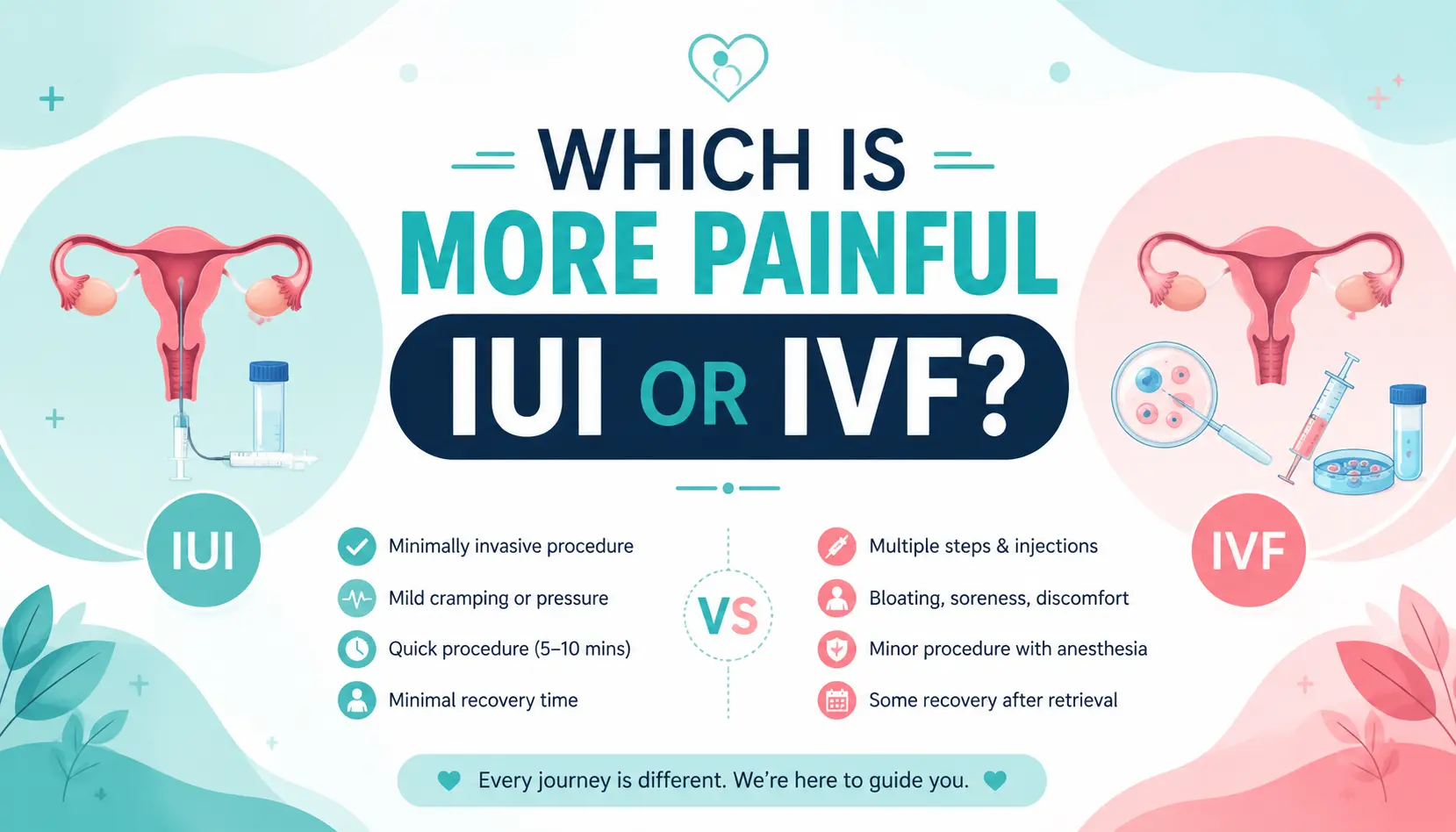
If you are considering fertility treatment, one of the most common questions is: Which is more painful, IUI or IVF?
The short answer is that IVF generally involves more physical discomfort than IUI because it includes multiple stages, daily hormone injections, ovarian stimulation, egg retrieval, and recovery. IUI is a shorter and minimally invasive procedure that usually causes only mild cramping or pressure.
However, pain and discomfort can vary from person to person. IVF is not necessarily an unbearable experience. Modern fertility treatment uses medication, sedation, or anesthesia during appropriate procedures to help make the process manageable.
IUI vs IVF: What Is the Difference?
IUI (Intrauterine Insemination) is a relatively simple fertility procedure in which prepared sperm is placed directly inside the uterus using a thin catheter. The remaining fertilization process occurs naturally inside the body.
IVF (In Vitro Fertilization) is a multi-stage fertility treatment in which eggs are stimulated and retrieved, fertilized in a laboratory, and then the resulting embryo is transferred into the uterus.
The major difference is the number of treatment steps involved. IUI is generally a short procedure, while IVF involves several stages over multiple weeks.
READ MORE: IVF vs Test Tube Baby: What’s the Real Difference?
Is IUI Painful?
IUI is considered a minimally invasive fertility procedure.
During an IUI cycle, medications may be used to support ovulation. The main procedure involves inserting a thin plastic catheter through the cervix and into the uterus. Anesthesia is generally not required for this procedure.
What Does IUI Feel Like?
Some people may experience:
- Mild menstrual-like cramps
- Temporary pressure during catheter insertion
- Minor discomfort similar to a routine Pap smear
- Short-lived discomfort after the procedure
The source describes the typical IUI pain level as approximately 2–3 out of 10. The procedure itself generally takes around 5–10 minutes, and normal daily activities can usually continue afterward.
Is IVF Painful?
IVF involves more stages, so the overall physical experience can involve more discomfort than IUI.
Rather than one short procedure, IVF-related discomfort can occur across approximately 2–3 weeks, particularly during ovarian stimulation and recovery from egg retrieval.
READ MORE: Is IVF Painful? What to Expect During IVF Treatment
Let’s break the IVF process down.
IVF Stage 1: Ovarian Stimulation
During ovarian stimulation, hormone injections are used to encourage multiple eggs to mature.
According to the source, daily injections may continue for approximately 8–12 days. The injections can cause mild soreness, while the ovaries may become enlarged, leading to feelings of:
- Bloating
- Abdominal heaviness
- Fullness
- General discomfort
This stage can feel more physically demanding than an IUI procedure because the treatment continues over several days.
IVF Stage 2: Egg Retrieval
Egg retrieval is a minor procedure in which mature eggs are collected from the ovaries using an ultrasound-guided needle.
The source explains that this procedure is performed under sedation or anesthesia, so the procedure itself is not expected to cause pain while the patient is under anesthesia.
What Happens After Egg Retrieval?
After the effects of anesthesia wear off, some people may experience:
- Mild pelvic pain
- Abdominal heaviness
- Light spotting
- General soreness
The source describes these effects as generally lasting around 1–2 days.
IVF Stage 3: Embryo Transfer
Embryo transfer is considerably less invasive than egg retrieval.
A thin catheter is used to place the embryo into the uterus. Similar to IUI, anesthesia is not generally required for this step. The source describes the sensation as usually involving little to no pain, with some patients experiencing mild pressure.
Therefore, although IVF involves an invasive egg-retrieval procedure, embryo transfer itself is generally similar to IUI in terms of physical sensation.
IUI vs IVF Pain: Quick Comparison
| Factor | IUI | IVF |
|---|---|---|
| Invasiveness | Low | Moderate to high |
| Treatment duration | Usually 1–2 visits | Around 2–3 weeks of treatment and monitoring |
| Daily injections | May be minimal | Common during ovarian stimulation |
| Anesthesia | Not required | Used during egg retrieval |
| Main physical discomfort | Short-term cramping or pressure | Bloating, soreness and recovery discomfort |
| Recovery | Usually minimal | Some recovery may be needed after egg retrieval |
| Overall physical burden | Lower | Higher |
The comparison above reflects the treatment characteristics described in the source.
Which Is More Painful: IUI or IVF?
IVF is generally more physically demanding and can cause more cumulative discomfort than IUI.
IUI is a short, minimally invasive procedure that may cause temporary cramping or pressure. IVF involves several stages, including hormone injections, ovarian stimulation, egg retrieval, and embryo transfer.
However, it is important to understand that more treatment steps do not automatically mean severe pain. Much of the IVF experience may involve bloating, fatigue, heaviness, hormonal changes, and emotional stress rather than intense physical pain.
Is IVF Pain Worse Than IUI?
From a physical perspective, yes, IVF generally involves more discomfort than IUI.
The difference mainly comes from the length and complexity of treatment:
IUI:
Fertility medication → Ovulation monitoring → Sperm placement → Short recovery
IVF:
Ovarian stimulation → Daily injections → Monitoring → Egg retrieval → Recovery → Embryo transfer
This makes IVF a more physically involved fertility treatment.
Does IVF Cause More Emotional Stress?
Physical discomfort is only one part of the fertility treatment experience.
The source highlights that IVF can create significant emotional and mental fatigue because of:
- Frequent medical appointments
- Daily injections
- Blood tests
- Treatment monitoring
- Waiting periods
- Uncertainty surrounding treatment outcomes
Emotional stress can also influence how physical discomfort is perceived.
READ MORE: Why Did IVF Fail? Common Medical Reasons Explained
How Can You Prepare for IUI or IVF?
Understanding the treatment process beforehand can make the experience feel less overwhelming.
Before beginning fertility treatment, discuss:
- The expected treatment stages
- Medications and injections
- Monitoring requirements
- What you may feel during each procedure
- Expected recovery time
- When you can return to normal activities
- Any concerns about discomfort or anxiety
Having clear information can help you approach treatment with realistic expectations rather than fear.
When Should You Consider Fertility Treatment Guidance?
Choosing between IUI and IVF depends on the individual fertility situation. The source describes IUI and IVF as different treatment approaches, with IVF involving a substantially more extensive process.
If you are unsure which fertility treatment may be appropriate, professional fertility consultation can help you understand the available options based on your circumstances.
Fertility Treatment Consultation in Delhi
SurrogacyFertility provides IVF and IUI treatment consultation by helping individuals and couples connect with experienced fertility specialists and verified ART-registered clinics.
For IVF treatment, the platform supports patients from fertility evaluation and treatment planning through embryo transfer and pregnancy support. For IUI, guidance can include fertility assessment, ovulation monitoring, and treatment planning.
The platform focuses on transparent guidance, verified clinics, unbiased recommendations, and clear treatment-cost information. Consultation and clinic-matching guidance are provided free of cost.
Final Takeaway
IVF is generally more physically demanding than IUI, but neither treatment should automatically be considered extremely painful.
IUI is a short, minimally invasive procedure that may cause mild cramps or pressure. IVF involves more stages, including hormone injections, ovarian stimulation, egg retrieval, recovery, and embryo transfer, so the overall physical and emotional burden can be greater.
The most important point is that pain is only one factor when choosing a fertility treatment. The appropriate treatment depends on the individual’s fertility circumstances and treatment plan.
If you are considering IUI or IVF in Delhi, getting clear information about the treatment process, expected discomfort, clinic options, and costs can help you make a more informed decision. SurrogacyFertility provides free consultation and helps intended parents connect with verified ART-registered fertility clinics based on their medical needs, budget, and preferred location.
Need help understanding whether IUI or IVF may be suitable for your situation? Connect with SurrogacyFertility for free fertility treatment guidance and clinic matching.
Frequently Asked Questions (FAQs)
Yes. IUI is generally less physically demanding than IVF because it is a short, minimally invasive procedure involving a thin catheter placed into the uterus. It may cause mild cramping or pressure. IVF involves multiple stages, including hormone injections, ovarian stimulation, egg retrieval, and recovery, resulting in greater cumulative discomfort.
Egg retrieval during IVF is performed under sedation or anesthesia, so the procedure itself is generally not painful while anesthesia is active. Afterward, some patients may experience mild pelvic pain, abdominal heaviness, or spotting. These post-retrieval effects are described in the source as generally lasting around one to two days.
No. IVF embryo transfer is generally similar to IUI in terms of physical sensation. Both procedures use a thin catheter and typically do not require anesthesia. Patients may experience little to no pain, although mild pressure or temporary discomfort can occur during catheter placement.
IVF discomfort can be cumulative throughout the treatment process, which may last approximately two to three weeks. Ovarian stimulation commonly involves daily hormone injections for about 8–12 days and may cause bloating, heaviness, and soreness. After egg retrieval, mild pelvic discomfort or spotting may continue for around one to two days.
IVF can involve greater emotional and mental fatigue because it requires frequent medical visits, daily injections, blood tests, treatment monitoring, and waiting periods. The source also notes that emotional stress can affect how physical discomfort is perceived. Therefore, the IVF experience involves both physical and emotional considerations.