IVF, or In Vitro Fertilization, is a medical procedure that can help couples who are having difficulty conceiving naturally. In this process, an egg and sperm are combined in a laboratory to create an embryo. The embryo is then transferred into the uterus.
READ MORE: When Do You Need IVF? Key Signs Explained
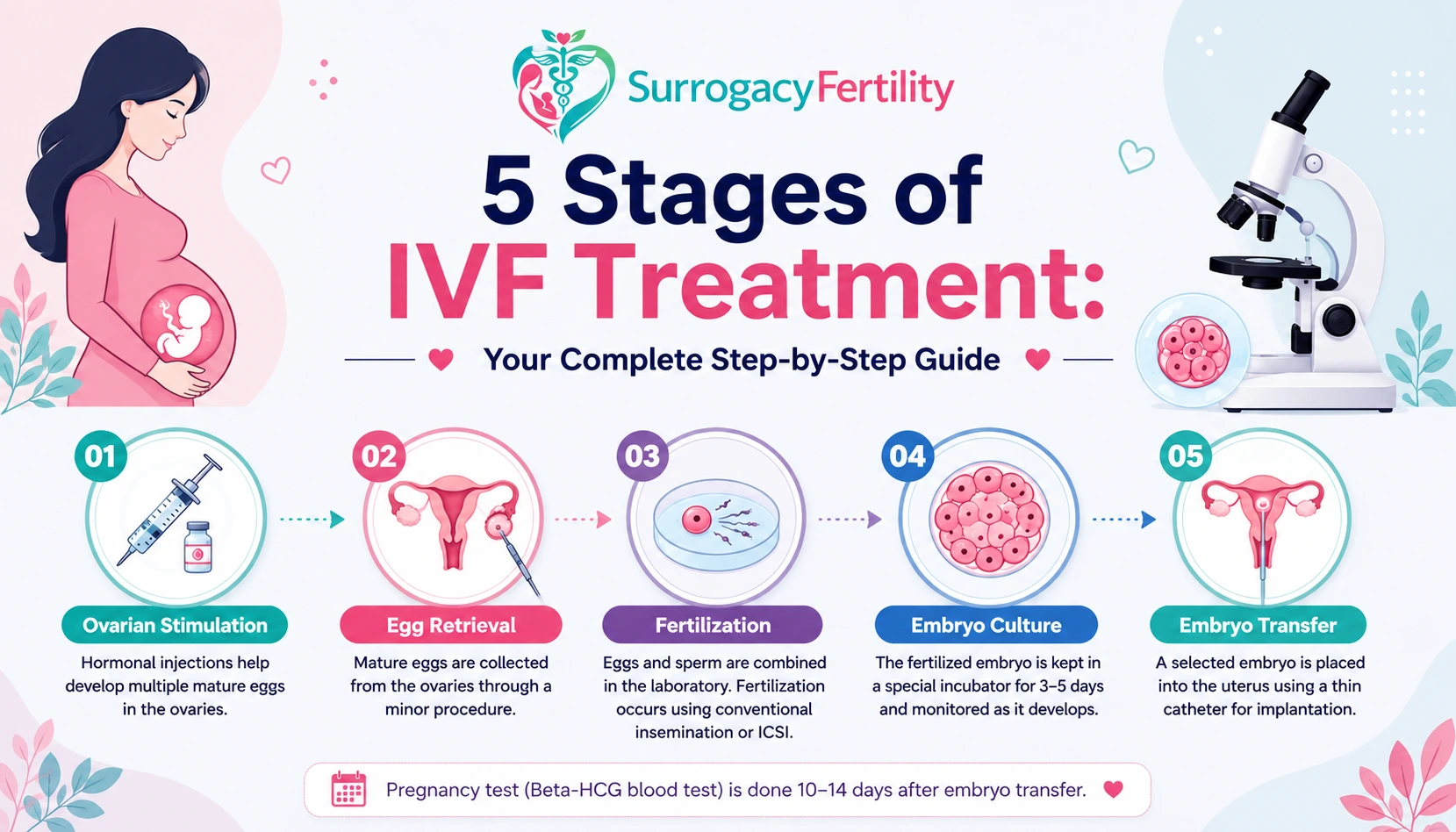
The IVF journey can be understood through five key stages: ovarian stimulation, egg retrieval, fertilization, embryo culture, and embryo transfer. Each stage has a specific purpose and plays an important role in the overall treatment process.
What Are the 5 Stages of IVF?
The five main stages of IVF are:
- Ovarian Stimulation – Multiple eggs are developed and matured.
- Egg Retrieval – Mature eggs are collected from the ovaries.
- Fertilization – Eggs and sperm are combined in a laboratory.
- Embryo Culture – The resulting embryo is monitored as it develops.
- Embryo Transfer – A selected embryo is placed into the uterus.
Let us understand each stage in detail.
Stage 1: Ovarian Stimulation
The first stage of IVF is ovarian stimulation, which focuses on developing multiple mature eggs.
Normally, only one egg is released during a monthly cycle. During IVF, hormonal injections are used to encourage the ovaries to mature several eggs at the same time. Having multiple eggs available provides more opportunities during the treatment process.
What happens during ovarian stimulation?
Hormonal injections are generally given for around 8–14 days. During this period, egg development is monitored through regular ultrasound examinations and blood tests.
The purpose is to observe how the eggs are developing and determine when they are ready for retrieval.
Why are multiple eggs developed?
Having several mature eggs gives the treatment process more options than relying on a single egg. It can be compared to carrying several pens before an important exam instead of depending on just one. Similarly, developing multiple eggs helps reduce the risk of having only one opportunity available.
Stage 2: Egg Retrieval
Once the eggs have matured, the next stage is egg retrieval.
This is a minor surgical procedure through which mature eggs are collected from the ovaries.
What happens during egg retrieval?
The patient is given mild sedation to help prevent discomfort. Using ultrasound guidance, a needle is used to gently aspirate fluid and eggs from the ovaries.
The procedure generally takes around 15–20 minutes.
On the same day, a sperm sample is also collected from the male partner.
The retrieved eggs are then taken to the laboratory for the next stage of the IVF process.
What is the purpose of egg retrieval?
The goal is to safely collect mature eggs so they can be combined with sperm in the laboratory for fertilization.
A simple way to understand this stage is to imagine carefully picking a ripe fruit without damaging it. Similarly, mature eggs are collected carefully from the ovaries.
Stage 3: Fertilization
After egg retrieval, the process moves to fertilization.
During this stage, the collected eggs and sperm are brought together in a controlled laboratory environment so that fertilization can occur.
How does fertilization happen in IVF?
The laboratory expert, known as an embryologist, selects the best-quality sperm. Fertilization can take place through two approaches described in the source material:
Conventional Insemination
In conventional insemination, the sperm and egg are placed together in a Petri dish. The sperm is allowed to naturally penetrate the egg.
ICSI
ICSI, or Intracytoplasmic Sperm Injection, involves injecting a single sperm directly into an egg.
This approach may be used when sperm motility is low.
Once fertilization occurs, the resulting cell continues to develop into an embryo.
Stage 4: Embryo Culture
After fertilization, the developing cell is known as an embryo. The next stage is called embryo culture.
During this stage, the embryo remains in the laboratory under carefully controlled conditions while its development is monitored.
READ MORE: Why Did IVF Fail? Common Medical Reasons Explained
What happens during embryo culture?
The embryo is kept in a special incubator for around 3–5 days.
By around Day 5 or Day 6, the embryo may reach the blastocyst stage, described in the source as a structure containing more than 100 cells.
During this period, embryologists observe embryo development and assess which embryo appears to be the healthiest for transfer.
Why is embryo monitoring important?
Embryo culture allows the developing embryo to be observed before the transfer stage. It is similar to caring for a young plant in a nursery and watching its development to see whether it is becoming strong.
Stage 5: Embryo Transfer
Embryo transfer is the final major stage of the IVF process.
During this procedure, a selected embryo is placed inside the uterus with the aim of allowing it to attach to the uterine lining.
What happens during embryo transfer?
A thin and flexible tube called a catheter is used to place the selected embryo into the uterus.
According to the provided source, anesthesia is not required for this procedure.
The embryo is transferred into the uterus so that it can potentially attach, or implant, and continue developing.
What happens after embryo transfer?
Around 10–14 days after the transfer, a Beta-HCG blood test is performed to check whether pregnancy has occurred.
This stage can be compared with planting a prepared plant into suitable soil. The embryo is placed into the uterus so that it has the opportunity to attach to the uterine lining.
IVF Stages at a Glance
| IVF Stage | What Happens |
|---|---|
| 1. Ovarian Stimulation | Hormonal injections help multiple eggs mature. |
| 2. Egg Retrieval | Mature eggs are collected from the ovaries. |
| 3. Fertilization | Eggs and sperm are combined in the laboratory. |
| 4. Embryo Culture | The embryo develops in a special incubator and is monitored. |
| 5. Embryo Transfer | A selected embryo is placed into the uterus. |
How Long Does the IVF Process Take?
The provided information describes individual stages rather than giving one total IVF treatment duration.
The ovarian stimulation stage generally involves 8–14 days, egg retrieval takes approximately 15–20 minutes, and embryo culture generally lasts around 3–5 days. Pregnancy testing is performed approximately 10–14 days after embryo transfer.
The exact overall timeline can therefore vary depending on how the individual treatment progresses.
What Is the Difference Between Fertilization and Embryo Culture?
Fertilization is the stage where the egg and sperm are brought together so fertilization can occur.
Embryo culture happens after fertilization. During this stage, the developing embryo is kept in a special laboratory incubator and monitored as it grows.
In simple terms:
Fertilization = Egg + Sperm → Fertilization
Embryo Culture = Developing embryo → Growth and monitoring
Is ICSI a Separate IVF Stage?
No. Based on the provided information, ICSI is one of the methods used during the fertilization stage of IVF.
In conventional insemination, sperm and egg are placed together in a Petri dish. With ICSI, a single sperm is directly injected into the egg, particularly when sperm motility is low.
Therefore, ICSI should be understood as a fertilization technique within the IVF process rather than a separate sixth stage.
What Happens After the Five IVF Stages?
The five stages take the process from developing eggs through embryo transfer. After transfer, the source describes a Beta-HCG blood test approximately 10–14 days later to confirm pregnancy.
This means the IVF journey described here can be summarized as:
Egg development → Egg retrieval → Fertilization → Embryo development → Embryo transfer → Pregnancy testing
Getting Guidance Through Your IVF Journey
Understanding the IVF process can make an otherwise complicated fertility journey easier to follow. However, every family’s situation can be different, and treatment planning requires appropriate medical evaluation and professional guidance.
SurrogacyFertility that helps intended parents connect with verified, ART-registered fertility clinics across Delhi NCR and India. The platform provides guidance on treatment options, clinic matching, treatment planning, and related fertility services.
For families exploring IVF, the platform provides IVF treatment consultation, including assistance in connecting with experienced fertility specialists and fertility clinics and guidance through the IVF journey from fertility evaluation and treatment planning to embryo transfer and pregnancy support.
The stated approach focuses on transparent information, verified clinics, unbiased recommendations, and clear treatment-cost guidance rather than marketing promises.
Conclusion
The IVF process can be understood through five main stages: ovarian stimulation, egg retrieval, fertilization, embryo culture, and embryo transfer.
Each stage has a distinct purpose. Multiple eggs are developed during stimulation, mature eggs are collected during retrieval, fertilization takes place in the laboratory, embryos are monitored during culture, and a selected embryo is transferred into the uterus.
For anyone beginning an IVF journey, understanding these stages can provide a clearer picture of what the treatment involves. Professional fertility guidance can also help families understand their available options and connect with an appropriate fertility clinic based on their individual requirements.
This version is structured for featured snippets, AI answers, voice/conversational search, and human readability, while keeping the medical details restricted to the material you supplied.
Frequently Asked Questions ( FAQs )
The five main stages of IVF are ovarian stimulation, egg retrieval, fertilization, embryo culture, and embryo transfer. During these stages, multiple eggs are developed, mature eggs are collected, fertilization occurs in a laboratory, embryos are monitored as they develop, and a selected embryo is transferred into the uterus.
Ovarian stimulation generally involves 8–14 days of hormonal injections. During this stage, regular ultrasounds and blood tests are used to monitor egg development. The goal is to help multiple eggs mature in the ovaries before they are collected during the egg retrieval stage.
During egg retrieval, mature eggs are collected from the ovaries through a minor procedure. Mild sedation is given, and ultrasound guidance is used to gently aspirate fluid and eggs. The procedure takes approximately 15–20 minutes, and a sperm sample is also collected on the same day.
During IVF fertilization, retrieved eggs and sperm are brought together in a laboratory. Conventional insemination allows sperm to naturally penetrate the egg in a Petri dish, while ICSI involves injecting a single sperm directly into the egg. ICSI may be used when sperm motility is low.
After embryo transfer, a Beta-HCG blood test is performed approximately 10–14 days later to check whether pregnancy has occurred. During embryo transfer, a selected embryo is placed into the uterus using a thin, flexible catheter, allowing the embryo an opportunity to attach to the uterine lining.
1 Comment
How Does IVF Get You Pregnant? A Complete Step-by-Step Guide | Surrogacy Fertility
September 14, 2026[…] READ MORE: How Does IVF Get You Pregnant? A Complete Step-by-Step Guide […]