
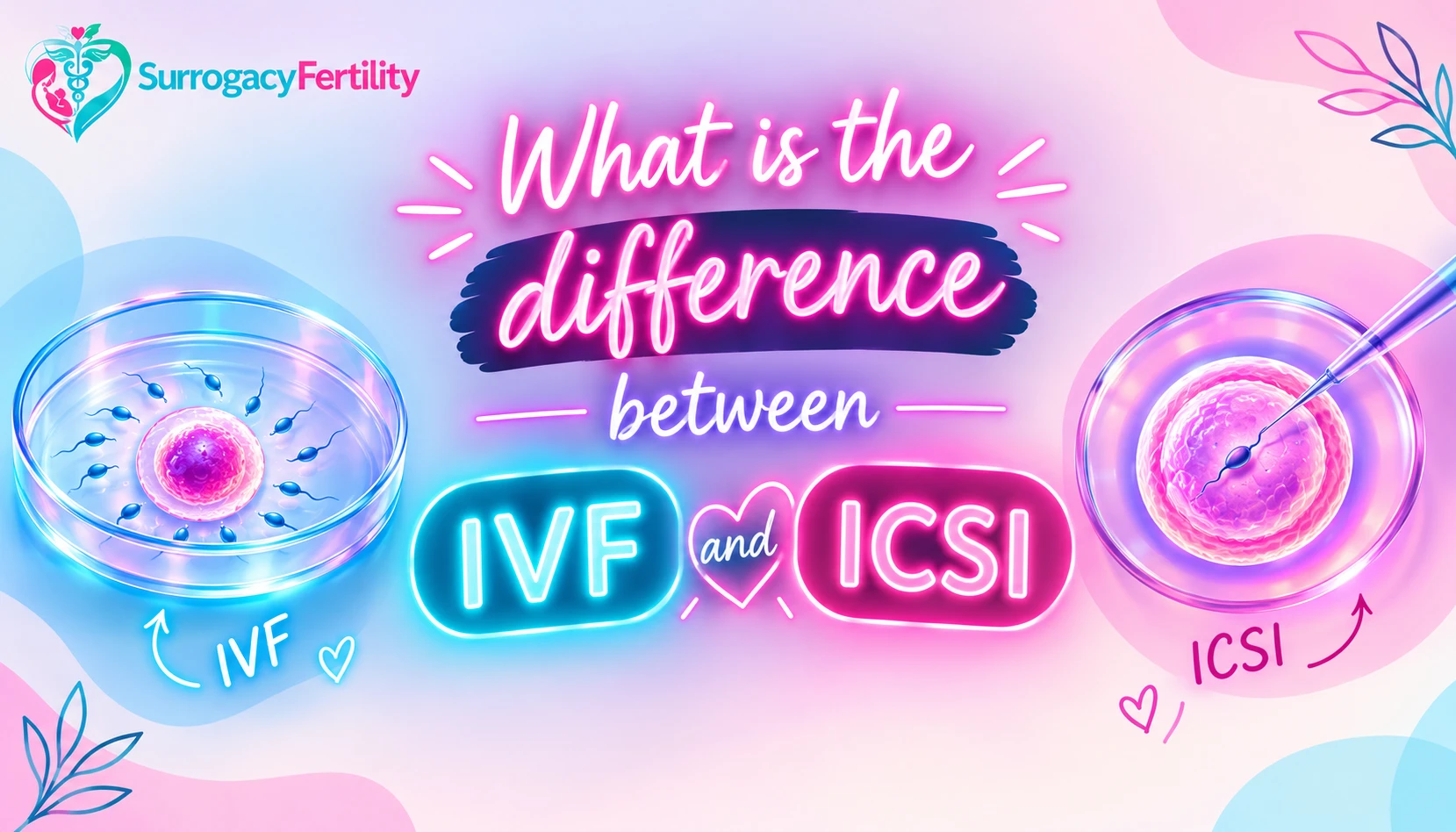
IVF and ICSI are both lab-based fertility treatments. Both fertilize an egg outside the body, then place the embryo into the uterus.
The real difference is how fertilization happens:
- IVF (In Vitro Fertilization): Sperm and egg are placed together in a lab dish. Fertilization happens on its own.
- ICSI (Intracytoplasmic Sperm Injection): An embryologist (lab specialist who handles eggs, sperm, and embryos) picks one healthy sperm and injects it directly into the egg.
Which is best?
- Normal sperm health → IVF is usually enough and more cost-effective.
- Male fertility problems → ICSI is the better fit.
- The final answer depends on a proper fertility check-up.
What Is IVF (In Vitro Fertilization)?
IVF is a well-established fertility treatment. It has helped many couples become parents when natural conception wasn’t working.
The process usually takes 12 to 14 days, depending on the patient. Here’s how it works, step by step:
- Ovarian stimulation – Hormone injections help the ovaries produce multiple eggs (instead of just one, like in a natural cycle).
- Egg retrieval (oocyte pickup) – Eggs are collected from the patient under anesthesia, in a short procedure.
- Fertilization in the lab – Eggs and sperm are placed together in a dish. Fertilization happens naturally.
- Embryo culture – The fertilized egg grows into an embryo over a few days, under close lab monitoring.
- Embryo transfer – A healthy embryo is placed back into the uterus.
Read More: How Does IVF Treatment Work?
Who Is IVF Recommended For?
IVF is usually the first choice when:
- Semen (sperm) parameters are normal
- The issue is on the female side — blocked tubes, ovulation problems, or age-related fertility decline
- The cause of infertility is unexplained
What Is ICSI (Intracytoplasmic Sperm Injection)?
ICSI starts exactly like IVF. Hormone injections and egg retrieval are the same.
The difference happens only in the lab, at the fertilization step.
Instead of letting sperm and egg fertilize naturally, an embryologist:
- Checks each sperm closely under a microscope
- Picks the sperm with the best shape, movement, and quality
- Injects that one sperm directly into the egg using a fine needle
This is why ICSI is called a specialized form of IVF — it’s an added lab technique, not a separate treatment.
Read More: What Happens During an ICSI Cycle?
When Is ICSI Recommended?
ICSI is mainly used for male fertility problems, including:
- Low sperm count (oligospermia)
- Poor sperm movement (asthenospermia)
- Abnormal sperm shape (teratospermia)
- A past IVF cycle where fertilization didn’t happen
- Sperm collected through a minor surgical procedure
IVF vs ICSI: Success Rates
Do success rates differ between IVF and ICSI?
- When sperm health is normal, IVF and ICSI have similar success rates.
- When there’s a male fertility issue, ICSI works better than standard IVF.
- ICSI does not automatically mean a higher success rate — it depends entirely on why it’s being used.
Are There Any Risks with ICSI?
ICSI involves directly handling the egg, so there are a few extra points to be aware of:
- A slightly higher chance of multiple pregnancy, especially if more than one embryo is transferred
- A slightly higher chance of certain genetic or developmental concerns
Is this something to worry about?
- These risks are well known and manageable.
- A fertility specialist monitors and manages them closely.
- Most ICSI pregnancies go smoothly, with no complications.
Cost Comparison: IVF vs ICSI
Is ICSI more expensive than IVF?
Yes. ICSI generally costs more than standard IVF.
Why does ICSI cost more?
- It needs extra embryologist time
- It requires specialized micro-injection equipment
- It demands a higher level of lab skill and precision
What affects the overall cost of either treatment?
- The patient’s individual medical profile
- The type and amount of fertility medication needed
- The clinic’s location and facilities
- The experience level of the embryology team
Cost structures also vary between government hospitals and private clinics, so it helps to know what to expect before applying anywhere.
Read More: IVF Cost in AIIMS Delhi: What You Should Know Before You Apply (2026)
Which Is Best — IVF or ICSI?
Choose IVF if:
- Sperm parameters are normal
- The main issue is female-factor infertility
- You want a standard, well-tested protocol
- Cost is a key factor and male infertility isn’t present
Choose ICSI if:
- Sperm count, motility, or shape is abnormal
- A previous IVF cycle failed to fertilize
- Sperm was retrieved through a surgical procedure
- Male infertility is the main diagnosis
In short:
- Normal sperm health → IVF and ICSI perform equally well.
- Male fertility issues → ICSI gives a clear advantage.
Read More: ICSI vs IVF Difference?
The right option depends on a full diagnostic check — semen analysis, ovarian reserve testing, and treatment history — done by a fertility specialist.
Frequently Asked Questions
Not always. ICSI is only more successful in cases of male infertility. With normal sperm, both have similar success rates.
Yes. ICSI costs more because it needs extra embryologist skill and lab time for the sperm-injection step.
Yes, in some specific cases. But for couples with normal sperm, standard IVF works just as well and costs less.
It carries a slightly higher chance of multiple pregnancy and certain genetic concerns. Both are manageable with proper monitoring.
Both usually take 12 to 14 days, from the first hormone injection to the embryo transfer. This can vary by patient.
Making an Informed Decision
Choosing between IVF and ICSI isn’t about which one is “better” overall.
It’s about which one matches your specific fertility diagnosis.
Why does the right guidance matter so much here?
- Clinic options can feel overwhelming
- Success-rate claims often vary from clinic to clinic
- Pricing isn’t always transparent upfront
A free, unbiased consultation platform can help cut through this confusion. It connects intended parents with verified, ART-registered fertility clinics — without pushing any one provider, and without hidden charges.
Clear, honest cost breakdowns and simple legal guidance can make this decision far less stressful — helping you move forward with confidence, not guesswork.
SurrogacyFertility offers this kind of free consultation and clinic-matching support, from your first query through to the end of your treatment journey.
3 Comments
What Is The Age Limit For ICSI? A Simple, Honest Guide | Surrogacy Fertility
September 12, 2026[…] Read More: What Is the Difference Between IVF and ICSI, Which Is Best? […]
IVF Vs ICSI Vs IMSI: What's The Difference And Which One Do You Need? | Surrogacy Fertility
September 16, 2026[…] Read More: What Is the Difference Between IVF and ICSI? […]
Intracytoplasmic Sperm Injection (ICSI): Full Guide | Surrogacy Fertility
September 23, 2026[…] 📖 Read More: What Is the Difference Between IVF and ICSI? […]