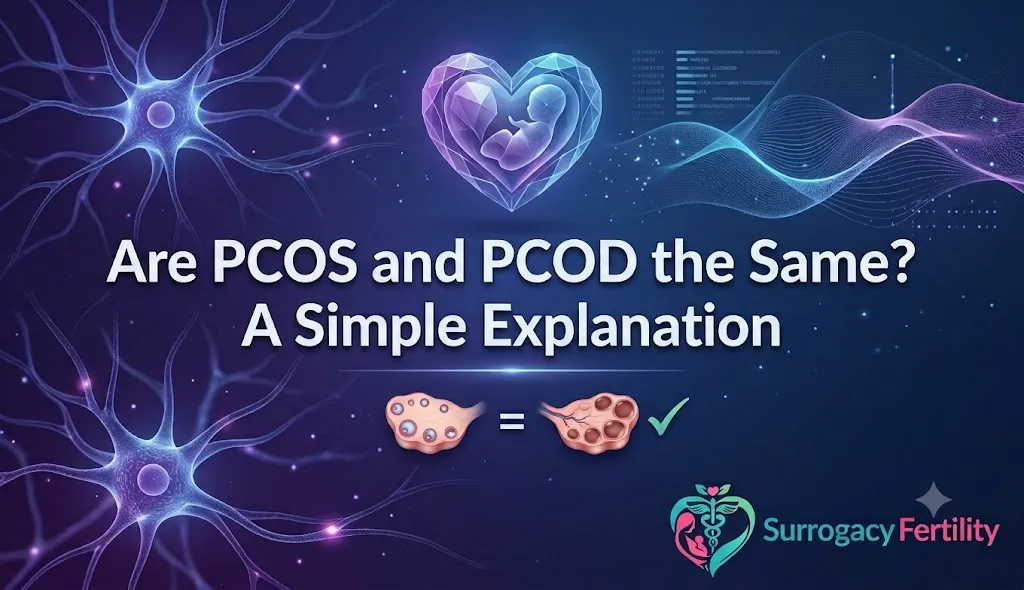
PCOS and PCOD are the same condition. PCOD is an older name that has been replaced by PCOS.
What Is PCOS?
PCOS stands for Polycystic Ovarian Syndrome. It affects the ovaries and the whole body.
- Ovaries are the organs that release eggs and make female hormones.
- “Syndrome” means a group of signs and symptoms that appear together.
- It can show up in your periods, skin, hair, and weight.
What Is PCOD?
PCOD stands for Polycystic Ovarian Disease. It is the older medical term for the same condition.
- Many people still use this name in daily life.
- Updated medical guidelines now use PCOS instead.
- The two names do not describe two different conditions.
Are PCOS and PCOD the Same Thing?
Yes, there is no difference between them.
- PCOD is the old term. PCOS is the current term.
- The condition, symptoms, and effects are the same.
Why Was PCOD Renamed PCOS?
The name changed because the condition is not limited to the ovaries.
- It affects the whole body, not just one organ.
- “Disease” suggested a problem only in the ovaries.
- “Syndrome” fits better, as it covers many symptoms across the body.
What Are the Symptoms of PCOS?
PCOS can cause changes in periods, hair, skin, and weight.
- Irregular periods
- Multiple cysts (small fluid-filled sacs) in both ovaries
- Extra hair growth on the face and body
- Hair loss
- Darker skin patches (increased skin pigmentation)
- Fast weight gain
How Does PCOS Affect Weight?
PCOS can cause insulin resistance, which leads to rapid weight gain.
- Insulin is a hormone that helps your body use sugar for energy.
- In insulin resistance, the body does not respond to insulin properly.
- Weight can increase quickly, and losing it becomes harder.
Read More: What Are the Reasons of PCOD?
Which Name Should You Use: PCOS or PCOD?
Use PCOS. It is the correct and current medical term.
- If someone says PCOD, they mean the same condition.
- Using PCOS keeps you aligned with updated medical guidelines.
When Should You Talk to a Doctor?
Talk to a doctor if you notice the symptoms listed above.
- Your periods are irregular.
- You see extra hair growth or hair loss.
- Your skin is getting darker in patches.
- You are gaining weight quickly and cannot lose it.
A doctor can confirm the condition and guide you on the next steps.
Need Guidance on Your Family-Planning Journey?
SurrogacyFertility offers free, unbiased guidance for families in Delhi NCR and across India.
- We are a consultation platform, not a clinic.
- We connect you with verified, ART-registered fertility and surrogacy clinics.
- We offer honest advice with no hype and no guaranteed-success claims.
- Our consultation, clinic matching, and legal guidance are free for families.
- Services include IVF, IUI, ICSI, male infertility consultation, and surrogacy consultation.
- Legal guidance under the Surrogacy (Regulation) Act, 2021, in simple language.
Read More: Can a Girl with PCOD Get Pregnant?
Frequently Asked Questions (FAQs)
Yes, PCOS and PCOD are the same condition. PCOD (Polycystic Ovarian Disease) is the older term, and PCOS (Polycystic Ovarian Syndrome) is the current medical term. Updated medical guidelines no longer treat them as two different conditions, so the symptoms and effects are the same.
PCOS stands for Polycystic Ovarian Syndrome, and PCOD stands for Polycystic Ovarian Disease. PCOD is the older name for the same condition. A syndrome means a group of signs and symptoms that appear together, which is why PCOS is the term used in updated medical guidelines today.
PCOD was renamed PCOS because the condition is not limited to the ovaries and affects the entire body. The word "disease" suggested a problem only in the ovaries, while "syndrome" covers many symptoms across the body, such as irregular periods, hair changes, skin pigmentation, and weight gain.
Common PCOS symptoms include irregular periods, multiple cysts (small fluid-filled sacs) in both ovaries, extra hair growth on the face and body, hair loss, darker skin patches from increased pigmentation, and fast weight gain. If you notice these signs, a doctor can confirm the condition and guide you on the next steps.
PCOS can cause insulin resistance, which means the body does not respond properly to insulin, the hormone that helps your body use sugar for energy. This leads to rapid weight gain and makes losing weight more difficult than usual. It is one of the whole-body effects of PCOS.
Key Takeaways
- PCOS and PCOD are the same condition.
- PCOS is the current term. PCOD is the old one.
- The name changed because the condition affects the whole body.
- Common signs include irregular periods, hair changes, skin darkening, and weight gain
2 Comments
What Happens If A Girl Has PCOD?
October 4, 2026[…] Read More: Are PCOS and PCOD the Same? A Simple Explanation […]
Why Are My Breasts Sore Before A Period? Causes & Relief
October 19, 2026[…] Read More: Are PCOS and PCOD the Same? A Simple Explanation […]